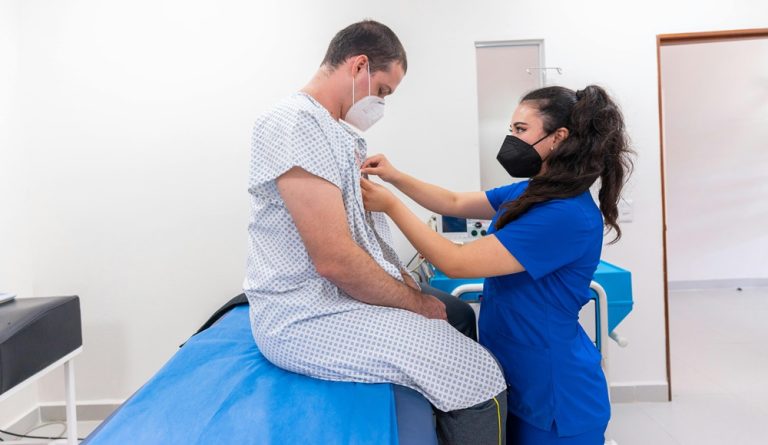
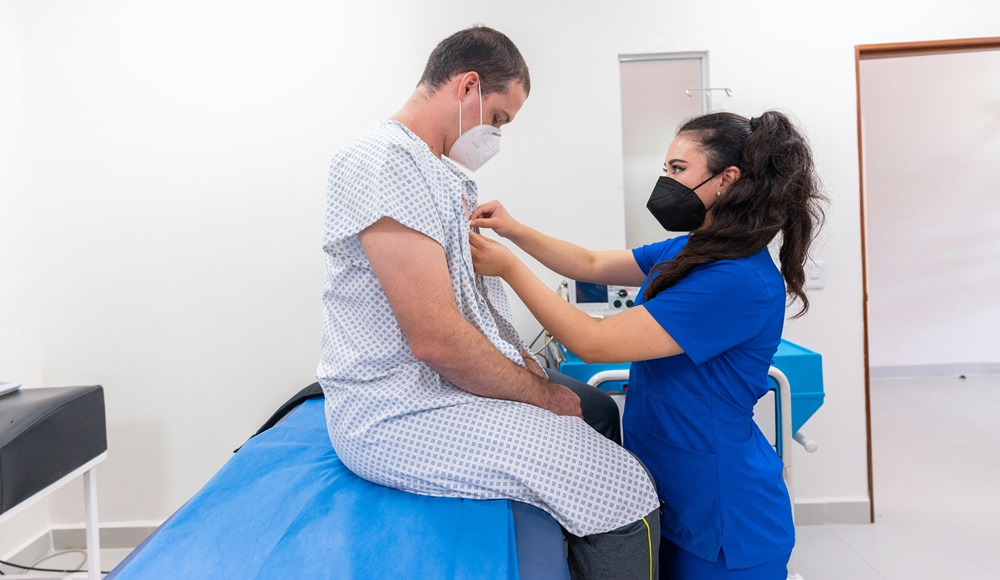
When you’re constantly moving between patient rooms, reaching for supplies, or helping someone out of bed, your nurse uniform dress becomes more than just clothing.
You need freedom to move without fabric pulling, riding up, or getting in your way. A well-fitted uniform directly impacts how easily you can do your job and how your body feels at the end of a twelve-hour shift.
Physical therapists who study workplace ergonomics have identified specific movements nurses repeat hundreds of times per shift. These movements put unique demands on your clothing that regular office wear never faces.
What Movements Do You Perform Most Often?
Your typical shift involves seven core physical actions that test your uniform’s fit.
You bend forward to check vitals, reach overhead for IV bags, squat down to floor-level storage, twist to grab supplies from side carts, extend your arms during patient transfers, walk quickly down hallways, and lift equipment or assist patients.
Research from the Bureau of Labor Statistics shows that nurses walk between four and five miles during an average shift.
You’re also bending forward approximately 200 times and reaching overhead around 150 times per day. Each of these actions requires specific room in your uniform.
How Should the Shoulders Fit?
The shoulder seam placement makes or breaks your range of motion. You want the seam to sit right at the edge of your shoulder bone, not drooping down your arm or pulling up toward your neck.
When you raise your arms to adjust an IV pole, the fabric should move with you instead of restricting upward motion.
Test this by lifting both arms straight up. Your uniform should stay in place around your waist and not ride up to expose your midsection.
The armhole needs to be cut high enough to prevent gaping but low enough that you can reach without strain.
What About Length and Hem?
Your nurse uniform dress length affects how you squat, kneel, and bend. Most healthcare facilities require hemlines that fall between mid-thigh and just above the knee. This range gives you modesty while allowing your legs full movement.
Physical therapists recommend testing your uniform length by performing a deep squat.
The hem should stay in place without riding up excessively. You should also be able to take stairs comfortably without adjusting your dress with each step.
| Movement Type | Recommended Fabric Give | Critical Fit Area |
| Forward bending | 2-3 inches of stretch | Lower back and shoulders |
| Overhead reaching | Full shoulder mobility | Armholes and upper back |
| Squatting | 3-4 inches at hem | Hip and thigh area |
| Side twisting | Fabric that moves with torso | Waist and side seams |
How Tight Should the Waist Be?
You need room to breathe, literally. A waist that’s too snug restricts your diaphragm and makes the physical demands of nursing even harder on your body.
Occupational health studies show that restrictive clothing around the midsection contributes to faster fatigue during long shifts.
Slip two fingers comfortably between the fabric and your waist. You should be able to do this without forcing or stretching the material.
When you bend forward to make a bed or help a patient, the waistband shouldn’t dig into your abdomen or create pressure points.
Does Fabric Type Matter for Movement?
The material composition affects how your uniform moves with you. Cotton-polyester blends with at least 5% spandex or elastane provide the stretch you need for repetitive motions.
Pure cotton feels comfortable but doesn’t recover its shape after stretching, which means your uniform will start to sag and lose its fit partway through your shift.
Mechanical stretch (built into the weave) works better than chemical stretch (spandex added) for durability. You’re washing your uniforms in hot water frequently, and mechanical stretch maintains its properties longer.

What Happens When Fit Goes Wrong?
Poor fit creates real problems beyond just discomfort. Restricted shoulder movement forces you to compensate with your back and neck, leading to muscle strain.
A 2019 study in the Journal of Occupational Health found that healthcare workers wearing ill-fitting uniforms reported 40% more musculoskeletal complaints than those with properly fitted workwear.
Tight armholes limit your reach and make you work harder to complete the same tasks. Fabric that doesn’t move with your body creates friction points that can lead to skin irritation after hours of wear.
How Do You Test Fit Before Buying?
Perform your common work movements while trying on uniforms. Reach both arms overhead and hold for ten seconds.
Do five squats. Twist your torso left and right. Walk briskly in place for thirty seconds. Bend forward as if you’re making a bed.
The uniform should feel comfortable through all these motions without pulling, bunching, or restricting you.
Pay attention to where the fabric creates resistance. Those spots will become problem areas during actual work.
Your nurse uniform dress serves as a tool that either helps or hinders your work.
Proper fit means you can focus on patient care instead of constantly adjusting your clothing.
You deserve workwear that supports the physical demands of nursing rather than adding to them.
About the Author