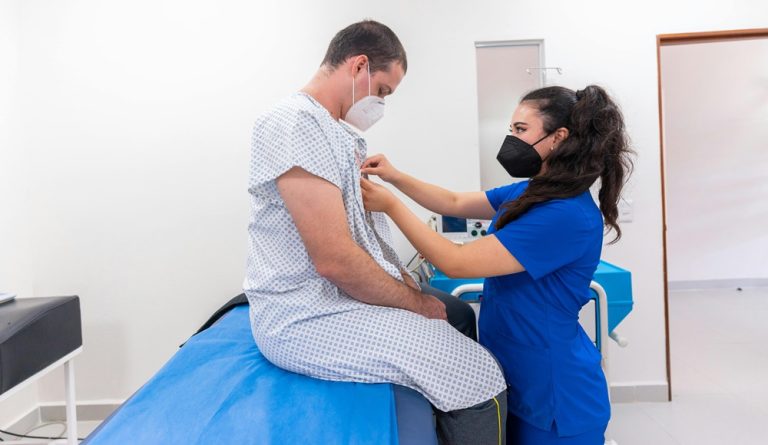

Maternity scrubs are designed to accommodate the changing fit and comfort needs that can come with pregnancy while maintaining the functionality expected from healthcare uniforms. The right maternity scrubs should provide sufficient room where the body needs it, comfortable support around the midsection, freedom of movement, and practical fabric and pocket features. Fit can change throughout pregnancy, so flexibility and adjustable construction can be especially valuable.
Quick Answer
The best maternity scrubs should accommodate a changing midsection without creating excessive pressure or restricting movement. When choosing maternity workwear, consider:
- Waist and belly room: Look for stretch, panels, or adjustable construction that can accommodate growth.
- Rise: The rise should provide comfortable coverage without pressing against the abdomen.
- Fabric: Stretch and softness can improve comfort during extended shifts.
- Length: Choose an inseam that works throughout pregnancy and with normal work footwear.
- Top coverage: Tops should provide sufficient length and mobility as the body changes.
- Pockets: Practical storage remains important for healthcare work.
- Fit: Avoid sizing based only on pre-pregnancy measurements.
- Workplace requirements: Color, style, and uniform policies still apply.
- Timing: A style that works early in pregnancy may fit differently later.
- Versatility: Adjustable or stretch construction can extend the useful life of maternity scrubs.
What Are Maternity Scrubs?
Maternity scrubs are healthcare uniforms designed to provide additional comfort and flexibility as the body changes during pregnancy.
They can include modifications such as:
- Stretch waistbands
- Knit maternity panels
- Adjustable waist construction
- Extra room through the abdomen
- Longer scrub tops
- Stretch fabrics
- Relaxed or flexible silhouettes
The exact design varies by manufacturer and collection.
Maternity scrubs are not necessarily oversized versions of standard scrubs. Their construction may be specifically adjusted to accommodate pregnancy-related changes in body shape.
For professionals looking for pregnancy-specific uniform options, a dedicated maternity scrub collection can make it easier to evaluate pants, tops, and other workwear designed around changing proportions.
Why Is Fit Important in Maternity Scrubs?
Pregnancy can change the way clothing fits across the abdomen, waist, hips, chest, and back.
A pair of standard scrub pants that fits comfortably before pregnancy may become restrictive as the abdomen grows.
A maternity garment can provide additional flexibility in areas where standard garments may not.
The goal is not to create an oversized uniform.
The goal is to maintain:
- Comfortable coverage
- Freedom of movement
- Appropriate support
- Professional appearance
- Practical functionality
How Should Maternity Scrub Pants Fit?
Maternity scrub pants should provide comfortable room around the abdomen while remaining secure through the waist, hips, and legs.

Check the waistband
The waistband should not create uncomfortable pressure around the abdomen.
Depending on the design, maternity pants may use:
- Stretch panels
- Elastic construction
- Adjustable waistbands
- Drawstrings
- Other flexible features
The preferred construction depends on the stage of pregnancy and individual comfort.
Check the rise
Rise becomes particularly important as the abdomen changes.
A comfortable rise should provide appropriate coverage without creating uncomfortable pressure.
Try the pants while:
- Standing
- Sitting
- Walking
- Bending
- Reaching
Check the hips and thighs
Pregnancy can change more than abdominal proportions.
The hips and thighs may also change, so the pants should provide sufficient room for comfortable movement.
Look for:
- Pulling across the hips
- Pocket distortion
- Restriction when sitting
- Excessive fabric
- Waistband movement
What Types of Maternity Scrub Pants Are Available?
Maternity scrub pants can use several different constructions.
Maternity panel pants
These pants use a stretch panel around the abdomen.
The panel can provide additional room while maintaining the appearance of conventional scrub pants.
Stretch-waist maternity pants
Stretch construction allows the waistband to adapt as the body changes.
Adjustable maternity pants
Adjustable features can allow the fit to be modified as pregnancy progresses.
Jogger-style maternity pants
Some maternity options use a jogger silhouette, combining pregnancy-friendly construction with a tapered lower leg.
Petite maternity pants
Petite maternity pants can provide shorter proportions for professionals who need less inseam.
Tall maternity pants
Tall maternity pants provide additional length for professionals who find standard inseams too short.
Current women’s maternity scrub offerings include specific petite and tall maternity pant options, illustrating why pregnancy fit and overall length may need to be considered separately. Petite maternity scrub pants
Should You Buy Your Normal Scrub Size During Pregnancy?
Not necessarily.
Pregnancy changes body proportions, so the best size may not correspond directly to the size worn before pregnancy.
Rather than automatically sizing up, examine the garment’s intended maternity construction and measurements.
A maternity pant designed with additional abdominal room may provide a better fit than a standard pant in a larger size.
Sizing up a standard garment can create excessive room around:
- Waist
- Hips
- Thighs
- Legs
without providing the appropriate support or coverage around the abdomen.
When Should You Switch to Maternity Scrubs?
There is no universal point in pregnancy when maternity scrubs become necessary.
The right time depends on:
- Body changes
- Current uniform fit
- Comfort
- Workplace requirements
- Personal preference
- The construction of existing scrubs
A useful indicator is when standard scrubs begin creating noticeable pressure or require repeated adjustment.
Instead of waiting until the garment becomes uncomfortable, some professionals may prefer transitioning when their existing uniforms no longer provide adequate room for normal movement.
How Should Maternity Scrub Tops Fit?
Maternity scrub tops should provide comfortable coverage as the abdomen and other body proportions change.
Important considerations include:
- Overall length
- Chest room
- Abdominal room
- Shoulder mobility
- Sleeve length
- Pocket placement
A top that fits correctly around the shoulders but becomes too short across the abdomen may not provide sufficient coverage later in pregnancy.
Look for appropriate length
A maternity top should remain comfortable when:
- Standing
- Sitting
- Reaching
- Bending
If the front of the top repeatedly rides upward, additional length or a maternity-specific design may be appropriate.
Professionals can also review the broader women’s scrub top selection when considering tops that work with maternity pants.
What Fabric Is Best for Maternity Scrubs?
There is no single best maternity scrub fabric.

However, certain characteristics can be particularly useful.
Stretch
Stretch can accommodate movement and changing body proportions.
It may be useful around:
- Waist
- Abdomen
- Hips
- Shoulders
Softness
A soft fabric can improve comfort during extended wear.
Breathability
Breathable construction can be useful in warm clinical environments or during active shifts.
Durability
Maternity scrubs still need to withstand regular laundering and repeated wear.
Wrinkle resistance
Wrinkle-resistant fabrics can help maintain a polished appearance with relatively simple care.
Fabric composition should be evaluated alongside construction and fit rather than treated as the only indicator of comfort.
Are Stretch Maternity Scrubs Better?
Stretch can be particularly useful because pregnancy involves changing proportions.
It can help accommodate movement around the abdomen and hips while allowing the garment to retain a relatively streamlined appearance.
However, more stretch does not automatically mean better fit.
A garment can still be uncomfortable if:
- The rise is too short
- The waistband creates pressure
- The inseam is wrong
- The shoulders are restrictive
- The top is too short
Stretch should support a good design rather than compensate for an incorrect size.
How Should Maternity Scrub Pants Fit at Different Stages of Pregnancy?
The fit can change as pregnancy progresses.
Early pregnancy
Standard scrubs may still feel comfortable depending on individual body changes.
At this stage, flexible waistbands and stretch construction can provide additional adaptability.
Middle pregnancy
The abdomen may become more prominent, making maternity panels, stretch construction, and additional room more useful.
Later pregnancy
Comfort and coverage may become increasingly important.
The waistband, rise, top length, and overall mobility should be reassessed rather than assuming the original fit will remain unchanged.
The goal is to have enough room without creating an unnecessarily oversized uniform.
Are Maternity Scrubs Comfortable for Long Shifts?
They can be, provided the garment fits the current stage of pregnancy and the demands of the job.
Long-shift considerations include:
- Waistband pressure
- Abdominal comfort
- Hip room
- Thigh mobility
- Fabric softness
- Breathability
- Stretch
- Pocket placement
- Overall garment weight
Healthcare professionals may spend hours standing, walking, sitting, bending, and reaching.
A maternity uniform should accommodate those movements without requiring constant adjustment.
How Important Are Pockets in Maternity Scrubs?
Pockets remain useful in maternity workwear.
Common options include:
- Front pockets
- Cargo pockets
- Chest pockets
- Cell-phone pockets
- Utility pockets
However, pocket position may become more important as the body changes.
A pocket that sits directly over a growing abdomen may feel different later in pregnancy than it did initially.
Avoid unnecessary pocket weight
Carrying heavy items in scrub pockets can affect comfort and garment fit.
Professionals should follow workplace policies regarding what can be carried and where items should be stored.
The most useful pocket arrangement is the one that provides practical access without creating unnecessary bulk.
Are Maternity Scrubs Available in Petite and Tall Sizes?
Yes, some maternity scrub styles are offered in different length proportions.

This is important because pregnancy does not eliminate existing differences in height and leg length.
A professional may need:
- Petite maternity pants
- Regular maternity pants
- Tall maternity pants
Current maternity offerings include petite and tall-length options, demonstrating that pregnancy-specific sizing can also account for different body proportions. Tall maternity scrub pants
Why length still matters during pregnancy
Choosing a larger regular size to accommodate the abdomen can create excessive length or width elsewhere.
A maternity-specific garment can provide abdominal room without necessarily changing the entire proportion of the garment.
What Are Petite Maternity Scrub Pants?
Petite maternity scrub pants are designed to combine pregnancy-friendly construction with shorter proportions.
They can be useful for professionals who find standard maternity pants too long.
Important measurements include:
- Waist
- Hip
- Inseam
- Rise
The objective is to accommodate the abdomen while maintaining appropriate leg length.
Professionals should not assume that a petite maternity garment is simply a shortened regular maternity pant. Construction and proportions can vary by manufacturer.
What Are Tall Maternity Scrub Pants?
Tall maternity scrub pants provide additional length for professionals who need a longer inseam.
They can be particularly useful when regular pants:
- Sit above the desired ankle position
- Ride up during movement
- Require an unnecessarily large size for additional length
Tall sizing should still provide appropriate waist, hip, rise, and thigh proportions.
The additional inseam should not come at the expense of overall fit.
Can You Wear Regular Scrub Pants During Pregnancy?
Some professionals can continue wearing regular scrub pants for part of pregnancy, particularly when the garment has flexible construction.
However, regular pants may eventually become uncomfortable as the abdomen changes.
Potential problems include:
- Waistband pressure
- Reduced coverage
- Difficulty sitting comfortably
- Restricted movement
- Frequent adjustment
The appropriate point to transition depends on individual comfort and the garment’s construction.
How Should You Choose Maternity Scrubs for Different Healthcare Roles?
Different healthcare roles can place different demands on uniforms.
Nurses
Nurses may spend significant time walking, standing, bending, and assisting patients.
Maternity scrubs for nursing work should prioritize:
- Mobility
- Comfortable abdominal fit
- Secure waistband
- Practical pockets
- Durable fabric
Medical Assistants
Medical assistants may alternate between clinical and administrative tasks.
Comfort while both standing and sitting can therefore be important.
Doctors
Doctors may prioritize a combination of professional appearance, mobility, and compatibility with other clinical garments.
Veterinary Professionals
Veterinary work can involve bending, squatting, and moving around animals.
Additional flexibility through the abdomen, hips, and thighs can be useful.
How Should Maternity Scrubs Be Layered?
Clinical environments can vary significantly in temperature.
Depending on workplace requirements, professionals may use:
- Scrub jackets
- Warm-up jackets
- Long-sleeve layers
- Underscrub tops
Layering should not create excessive restriction around the abdomen or shoulders.
The base scrub should remain comfortable underneath any approved outer layer.
How Should Maternity Scrubs Be Maintained?
Maternity garments can have stretch panels, elastic construction, or specialized fabric blends that require particular care.
Always follow the garment’s care label.
Check:
- Washing temperature
- Drying instructions
- Bleach restrictions
- Ironing instructions
- Special-care requirements
The Federal Trade Commission explains that covered textile apparel should provide appropriate care information to help consumers follow the manufacturer’s cleaning instructions. FTC Clothing and Textile Care Labeling Rule
Following the care instructions can help maintain the garment’s stretch, color, shape, and construction.
How Many Maternity Scrub Sets Do You Need?
The appropriate number depends on work schedule, laundering frequency, workplace requirements, and how quickly the garments are becoming uncomfortable.
A practical maternity wardrobe can include enough interchangeable pieces to avoid relying on one garment every day.
Consider having:
- Multiple scrub pants
- Several scrub tops
- At least one additional layer if required
- Different lengths if needed
- Enough pieces to accommodate regular laundering
Because body proportions can change throughout pregnancy, it can also be useful to avoid purchasing an excessive number of garments too early.
What Should You Consider Before Buying Maternity Scrubs?
Use the following checklist:
Fit
- Does the waistband remain comfortable?
- Is there sufficient abdominal room?
- Is the rise appropriate?
- Do the hips and thighs allow movement?
- Does the top provide enough coverage?
Length
- Is the inseam appropriate?
- Is petite or tall sizing available?
- Does the pant work with normal footwear?
Fabric
- Does it provide enough stretch?
- Is it breathable?
- Is it comfortable against the skin?
- Can it withstand regular laundering?
Function
- Are the pockets useful?
- Is the pocket position comfortable?
- Does the garment allow normal movement?
- Is layering possible if needed?
Workplace
- Is the color approved?
- Is the maternity style acceptable?
- Are there department-specific uniform requirements?
Common Maternity Scrub Buying Mistakes
Buying only for the current stage of pregnancy
A garment that fits today may become uncomfortable later.
Sizing up standard scrubs instead of considering maternity construction
A larger standard garment may create unnecessary width without providing the right abdominal proportions.
Ignoring the rise
The rise can significantly affect comfort as the abdomen changes.
Choosing based only on fabric stretch
Stretch is useful but cannot compensate for poor garment proportions.
Forgetting inseam
Pregnancy does not change the need for an appropriate pant length.
Overlooking top length
A scrub top that is comfortable early in pregnancy may become too short later.
Ignoring pocket placement
Pocket position can affect comfort as the abdomen changes.
Buying too many garments too early
Body proportions can continue changing, so purchasing a very large maternity wardrobe at the beginning of pregnancy may not always be practical.
Maternity Scrubs Buying Checklist
| Factor | What to Check |
| Abdominal room | Enough space without excessive looseness |
| Waistband | Comfortable and secure |
| Rise | Appropriate coverage and comfort |
| Hips | Sufficient room |
| Thighs | Natural movement |
| Inseam | Appropriate for height |
| Top length | Adequate coverage |
| Fabric | Comfortable and flexible |
| Stretch | Supports changing proportions |
| Pockets | Practical and well positioned |
| Layering | Works with approved outerwear |
| Care | Suitable for regular laundering |
| Workplace | Meets uniform requirements |
Professionals who want to evaluate maternity uniform options in person can also visit a medical uniform store to assess fit, length, fabric, and construction.
Final Thoughts
Maternity scrubs should accommodate pregnancy without sacrificing the functionality expected from professional healthcare uniforms.
The most important consideration is fit. The waistband, rise, abdomen, hips, thighs, inseam, and top length should all be evaluated because pregnancy can change proportions over time.
Maternity-specific construction can provide additional flexibility that simply sizing up a standard scrub does not always provide. Stretch panels, adjustable waistbands, longer tops, and flexible fabrics can help accommodate changing body dimensions.
Length also remains important. Petite and tall maternity options can help professionals maintain appropriate proportions rather than using an oversized standard garment to gain additional room.
Fabric, pockets, durability, and care requirements should also be considered, particularly because healthcare uniforms are worn for extended periods and washed frequently.
Ultimately, the right maternity scrubs should feel comfortable during normal clinical movement, provide appropriate coverage, support changing proportions, and comply with workplace uniform requirements.
Frequently Asked Questions
When should you start wearing maternity scrubs?
There is no universal point when maternity scrubs become necessary. The transition can depend on body changes, comfort, workplace requirements, and how existing uniforms fit. If standard scrubs begin creating pressure, riding up, or restricting movement, maternity-specific options may provide a more comfortable fit.
Should you size up in regular scrubs during pregnancy?
Sizing up regular scrubs is not always the best solution. A larger standard garment may add width through the waist, hips, and legs without providing the appropriate abdominal construction. Maternity-specific scrubs are designed to accommodate changing proportions more directly.
What should maternity scrub pants feel like?
Maternity scrub pants should provide comfortable abdominal room without excessive pressure or looseness. The waistband and rise should remain comfortable while sitting, standing, walking, and bending, while the hips, thighs, knees, and inseam should continue to allow normal movement.
Are maternity scrubs available in petite and tall sizes?
Some maternity scrub collections offer petite and tall options in addition to standard lengths. This allows professionals to address pregnancy-related fit changes while also accounting for their normal leg proportions and inseam requirements.
Can you wear maternity scrubs after pregnancy?
Some maternity garments may remain comfortable after pregnancy, particularly if they use flexible waistbands or stretch construction. However, the fit may change as the body returns toward its post-pregnancy proportions, so continued suitability depends on the specific garment and individual fit.
About the Author