
A successful business lunch requires more than finding a convenient place to eat. The right restaurant should provide a comfortable setting for conversation, a menu that suits different preferences, reliable service, and an environment that allows professionals to focus on their meeting. Whether the occasion involves a client discussion, a team lunch, or a networking opportunity, the restaurant can influence the overall experience.
Business lunches combine dining with professional interaction. Guests may need to discuss projects, build relationships, exchange ideas, or make decisions while enjoying a meal. Choosing an appropriate restaurant helps create the conditions for productive conversations without making the occasion feel unnecessarily formal.
From menu variety to seating arrangements, several practical considerations can help professionals select a restaurant that meets the needs of the meeting.
Key Takeaways
- A suitable business lunch restaurant should balance food quality, convenience, atmosphere, and service.
- Comfortable seating and manageable noise levels help professionals communicate effectively.
- Menu variety makes it easier to accommodate different dietary preferences.
- Efficient service is valuable when guests have limited time between meetings.
- Location and accessibility can influence attendance and punctuality.
- Reviewing the menu and planning ahead can reduce uncertainty.
- The best restaurant depends on the meeting’s purpose, guest preferences, and available time.
What Makes a Restaurant Suitable for a Business Lunch?
A business lunch restaurant should support both the meal and the professional conversation taking place around it. Guests need an environment where they can discuss important topics comfortably without unnecessary distractions.
Several factors contribute to a suitable setting:
- A comfortable dining environment.
- Tables that provide enough room for guests.
- A menu with varied meal options.
- Attentive but unobtrusive service.
- Convenient access for attendees.
- An atmosphere appropriate for the meeting.
A restaurant does not necessarily need to be formal or expensive to work well for business dining. A well-managed casual restaurant can be equally suitable when it provides the comfort, service, and menu variety the occasion requires.
How to Choose the Right Restaurant for Different Business Lunches
The purpose of the meeting should guide the restaurant choice. A short internal meeting may require a different environment from a client lunch or a networking event.
Client Meetings
When meeting a client, consider a restaurant that offers a comfortable setting, clear menu information, and dependable service. The environment should allow both parties to focus on conversation rather than managing dining-related distractions.
Team Lunches
Team lunches may prioritize menu variety, group seating, and a relaxed atmosphere. These gatherings can give colleagues an opportunity to discuss work informally while strengthening professional relationships.
Networking Lunches
Networking meetings benefit from an environment where conversation feels natural. Seating comfort, noise levels, and service pacing can influence how easily guests connect.
Working Lunches
Working lunches often have a defined time limit. A restaurant with an accessible menu and efficient service can help attendees enjoy their meals while keeping the meeting on schedule.
Why Location Matters for Business Lunch Restaurants
Location can affect attendance, punctuality, and the amount of time available for a meeting. A restaurant that is convenient for the attendees can reduce travel-related complications.
Before making a reservation, consider:
- Distance from offices or meeting venues.
- Parking and transportation options.
- Accessibility for all attendees.
- Expected travel time during lunch hours.
- Whether the location is easy for guests to find.
For professionals searching for business lunch restaurants, reviewing the location alongside the menu can help narrow down suitable choices.
A convenient restaurant allows attendees to spend less time traveling and more time participating in the meeting.
How Menu Variety Supports Professional Dining
Business lunches may include people with different tastes, dietary requirements, and food preferences. A restaurant with a varied menu makes it easier for each attendee to select a suitable meal.
Useful menu features include:
- Multiple entree options.
- Salads and lighter meals.
- Different protein choices.
- Vegetarian selections where available.
- A range of sides and beverages.
A broad menu can also simplify planning when the organizer does not know every attendee’s preferences.

Why Menu Clarity Matters
Clear menu descriptions help guests make decisions without repeatedly requesting explanations. Online menus are particularly useful because organizers can review available options before selecting a restaurant.
If an attendee has a food allergy or a medically necessary dietary restriction, the organizer or guest should confirm ingredients and preparation procedures directly with restaurant staff rather than relying only on menu labels.
Why Service Efficiency Matters During a Business Lunch
Business lunches often take place within a limited window between other professional responsibilities. Service delays can reduce the time available for conversation and make it harder to keep the meeting on schedule.
Restaurants that manage orders and service efficiently can make the experience more predictable.
Important considerations include:
- How easily guests can review and order from the menu.
- Whether the restaurant can accommodate the expected group size.
- How service pacing fits the meeting schedule.
- Whether staff can answer questions clearly.
- Whether the restaurant accepts reservations or advance arrangements.
Efficiency should not mean rushing guests unnecessarily. The objective is to provide a meal at a pace that fits the meeting’s needs.
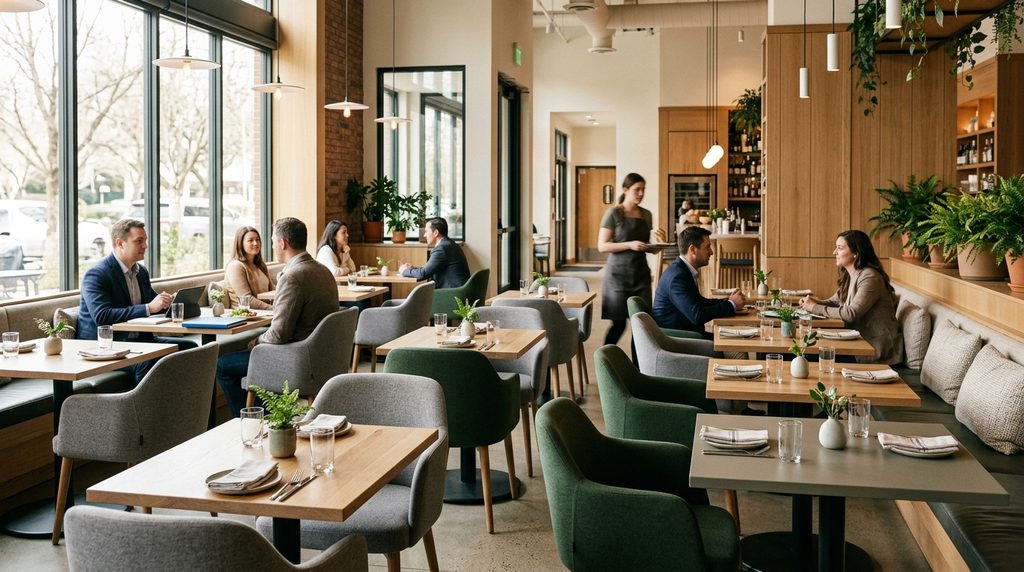
How Atmosphere Influences Business Conversations
The restaurant environment can affect how comfortably people communicate. Excessive noise, cramped seating, or frequent interruptions may make professional discussions more difficult.
When evaluating a restaurant, consider whether the environment supports the intended conversation.
Noise Levels
A restaurant with manageable background noise allows attendees to hear each other without repeatedly asking for clarification. Quieter seating areas may be particularly useful for client discussions or sensitive business topics.
Seating Arrangements
Tables should provide enough space for everyone to sit comfortably. For larger groups, confirming the seating arrangement in advance can help avoid awkward configurations.
Overall Ambience
A clean, welcoming environment creates a professional impression without requiring a formal setting. The best atmosphere is one that matches the purpose of the meeting and the preferences of the attendees.
How to Plan a Business Lunch Without Unnecessary Stress
A small amount of preparation can make a business lunch easier to coordinate.
Confirm the Meeting Details
Before selecting a restaurant, establish the expected number of attendees, meeting duration, and preferred location. These details help determine which restaurants are practical.
Review the Menu in Advance
Check the available meals, approximate prices, and dietary options. This can help identify potential concerns before the meeting begins.
Consider Reservations
Reservations may be useful when meeting with clients, organizing a group lunch, or visiting during a busy period. Contact the restaurant to confirm availability and discuss any specific requirements.
Allow Time for Travel
Include enough time for attendees to reach the restaurant, settle in, order, and complete the meeting without unnecessary pressure.

How Business Lunches Differ From Casual Dining
Business lunches and casual meals may take place in similar restaurants, but their priorities can differ.
| Consideration | Business Lunch | Casual Lunch |
| Main purpose | Professional discussion and dining | Relaxation and enjoyment |
| Atmosphere | Supports conversation | Can be more lively |
| Service | Should fit the meeting schedule | Depends on personal preference |
| Location | Often selected for attendee convenience | May be chosen for convenience or preference |
| Menu | Should accommodate varied preferences | Based on individual tastes |
| Planning | May involve reservations and timing | Often more flexible |
These distinctions are not absolute. A casual restaurant can work well for business dining when the environment and service meet the needs of the meeting.
Why Lunch Menus Matter for Professional Meetings
A dedicated lunch menu can help professionals make quicker dining decisions. It may provide options suited to shorter meal periods, making it easier to plan around meetings and afternoon commitments.
For guests exploring lunch restaurants near me, useful considerations include meal variety, location, service expectations, and the time available for dining.
A lunch menu can be especially helpful when attendees want a satisfying meal without spending too much time deciding what to order.
How to Evaluate a Restaurant Lunch Menu
A restaurant lunch menu should be practical for the meeting as well as appealing to the attendees.
Consider the following factors:
| Factor | What to Check |
| Variety | Are there options for different preferences? |
| Pricing | Does the menu fit the expected budget? |
| Descriptions | Are ingredients and preparations explained clearly? |
| Timing | Can the meal fit within the meeting schedule? |
| Flexibility | Are substitutions or dietary accommodations available? |
A menu that balances choice with clarity can make ordering easier for the entire group.
How Business Lunches Help Build Professional Relationships
A business lunch creates an opportunity to interact outside a formal meeting room. Sharing a meal can make conversation feel more natural and provide space for relationship-building alongside work-related discussion.
Business lunches may help professionals:
- Get to know clients and colleagues.
- Discuss projects in a less formal setting.
- Exchange ideas.
- Build rapport with new contacts.
- Strengthen existing professional relationships.
The restaurant supports the meeting, but the quality of the interaction depends on preparation, communication, and the participants themselves.
Common Mistakes to Avoid When Choosing a Business Lunch Restaurant
A restaurant that works well for a casual outing may not always suit a professional meeting. A few common mistakes can make business dining less effective.
- Ignoring noise levels: A lively environment may make detailed conversations difficult.
- Choosing an inconvenient location: Long travel times can reduce the time available for the meeting.
- Overlooking menu preferences: Limited choices may create difficulties for some attendees.
- Failing to plan for group size: The available seating may not suit the number of guests.
- Underestimating timing: Slow service can disrupt a meeting with a strict schedule.
- Assuming formal is always better: A comfortable, casual restaurant may be more appropriate for some business relationships.
Considering these factors in advance helps organizers select a restaurant that supports the meeting rather than distracting from it.
Frequently Asked Questions
What should I look for in a business lunch restaurant?
Look for a restaurant with a convenient location, comfortable seating, manageable noise levels, a varied menu, and service that fits the meeting schedule. The restaurant should also suit the meeting’s purpose and the preferences of the attendees.
Is a casual restaurant appropriate for a business lunch?
Yes. A casual restaurant can be appropriate when it provides a comfortable environment, dependable service, and enough space for professional conversation. The right choice depends on the meeting, the attendees, and the atmosphere of the restaurant.
Why is a lunch menu useful for business meetings?
A lunch menu can make meal selection more convenient by presenting options suited to midday dining. It may help attendees compare dishes and prices more quickly, making it easier to plan a meal around a limited schedule.
Should I make a reservation for a business lunch?
A reservation can be helpful for client meetings, larger groups, or busy lunch periods. It allows the organizer to confirm availability and discuss seating or other requirements before arriving.
How can I make a business lunch more productive?
Choose a suitable location, confirm the meeting time, review the menu, and account for travel. During the meal, balance professional discussion with natural conversation so attendees can enjoy the dining experience while addressing the meeting’s objectives.
Conclusion
Choosing the right restaurant for a business lunch requires balancing practical considerations with the quality of the dining experience. Location, menu variety, seating, atmosphere, and service all influence how effectively a restaurant supports a professional meeting.
A suitable restaurant helps attendees communicate comfortably, enjoy their meals, and use their time effectively. Whether the occasion involves a client discussion, a team gathering, or a networking lunch, planning around the group’s needs can make the experience more productive and enjoyable.
The best choice is not necessarily the most formal restaurant. It is the one that fits the purpose of the meeting and provides a reliable, comfortable setting for professional conversation.
About the Author