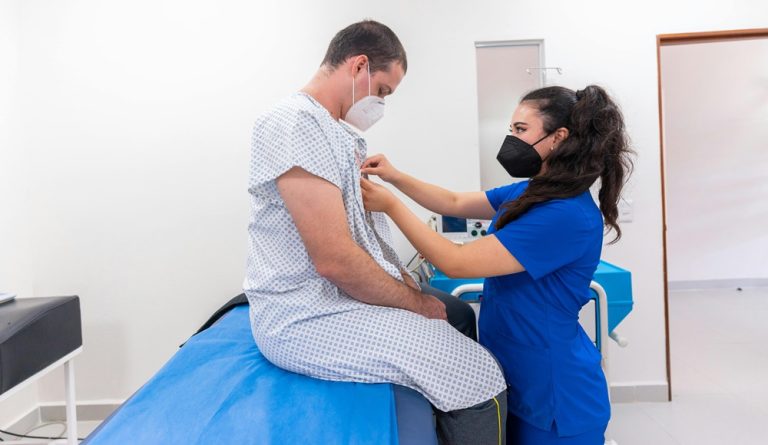

Soft stretch scrubs can provide a useful balance between comfort, flexibility, and professional appearance during demanding healthcare shifts. The best options are not defined by stretch alone. Fabric softness, stretch recovery, breathability, garment construction, fit, waistband design, and durability all influence how comfortable scrubs feel after hours of walking, bending, reaching, sitting, and standing.
Healthcare professionals should also consider how the fabric behaves after repeated washing and whether the garment’s fit works with their normal movement. A soft fabric may feel comfortable initially, but long-shift performance depends on the complete garment rather than one material characteristic.
Key Takeaways
- Softness and stretch are separate fabric characteristics that can work well together.
- Stretch can make scrubs more comfortable during repeated movement.
- Stretch recovery helps garments maintain their intended shape.
- Fabric composition affects softness, durability, breathability, and flexibility.
- A comfortable scrub should fit properly rather than rely on stretch to compensate for incorrect sizing.
- Lightweight construction can reduce bulk, but lightweight does not automatically mean breathable.
- Waistbands, seams, armholes, side vents, and garment proportions affect overall comfort.
- Scrubs should be evaluated for comfort after movement, not only while standing still.
- Frequent laundering makes fabric durability and care instructions important considerations.
- Soft stretch scrubs can be useful for nurses, doctors, medical students, and other healthcare professionals when the fabric and fit match the work environment.
What Are Soft Stretch Scrubs?
Soft stretch scrubs are medical uniforms made from fabrics designed to provide both a comfortable hand feel and elasticity.
The fabric may contain combinations of fibers such as:
- Rayon
- Polyester
- Nylon
- Cotton
- Spandex or elastane
Each fiber can contribute different characteristics.
For example:
Rayon can contribute softness and fluid drape.
Polyester can contribute durability and shape retention.
Nylon can contribute strength and abrasion resistance.
Spandex can provide elasticity and stretch.
The finished fabric depends on the blend, construction, weight, and finishing process.
Does Soft Mean Cotton?
No.
“Soft” describes how a fabric feels rather than establishing its fiber content.
A synthetic or blended fabric can have a soft hand feel.
This distinction is important because two fabrics can feel similarly soft while having very different performance characteristics.
Why Does Softness Matter in Medical Scrubs?
Scrubs remain in contact with the body for much of a workday.
A soft fabric can make a garment feel more comfortable during extended wear.
This can be particularly noticeable around areas where fabric frequently contacts or moves against the body, including:
- Neck
- Shoulders
- Arms
- Waist
- Hips
- Thighs
Softness is subjective, however. One professional may prefer a smooth fabric, while another may prefer a more substantial or structured feel.
How Does Stretch Improve Scrub Comfort?
Stretch allows fabric to extend as the body moves.
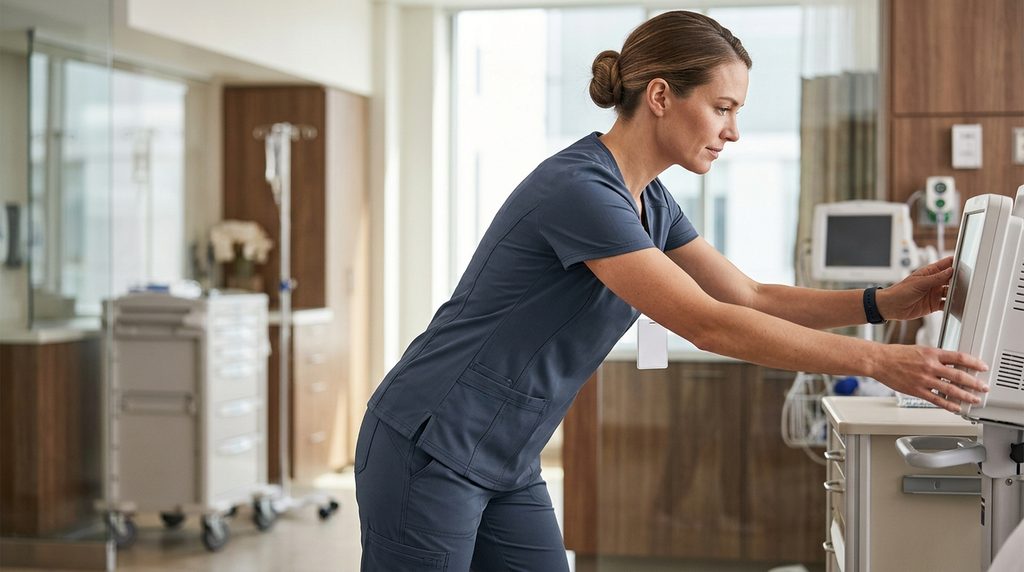
Healthcare professionals may repeatedly:
- Reach
- Bend
- Squat
- Walk
- Sit
- Stand
- Turn
- Lift
A stretch fabric can accommodate these movements rather than resisting them.
This can be especially useful during active clinical shifts.
What Is Stretch Recovery?
Stretch recovery describes how well a fabric returns toward its original shape after being stretched.
This matters because scrubs experience repeated movement throughout their useful life.
Good recovery can help maintain:
- Fit
- Shape
- Appearance
- Waistband position
- Garment structure
A fabric that stretches easily but recovers poorly may eventually develop unwanted bagging or distortion.
Is More Stretch Always Better?
No.
A high percentage of stretch fiber does not automatically make a scrub more comfortable or durable.
Excessive elasticity can sometimes result in:
- Less structure
- Greater garment movement
- Different drape
- Reduced shape stability
The goal is an appropriate amount of stretch for the intended garment and work environment.
What Fabrics Are Used in Soft Stretch Scrubs?
Modern scrub fabrics often use blends to combine multiple characteristics.
| Fiber | Potential Contribution |
| Rayon | Softness and fluid drape |
| Polyester | Durability and shape retention |
| Nylon | Strength and abrasion resistance |
| Cotton | Familiar natural-fiber feel |
| Spandex | Stretch and elasticity |
These are general textile characteristics. Actual performance depends on the specific fabric construction and blend.
How Does Rayon Affect Scrub Comfort?
Rayon is often valued for its soft hand feel and fluid drape.
When used in a blended fabric, it can help create a softer sensation while other fibers contribute different performance characteristics.
This can be useful for professionals who want stretch without sacrificing a soft fabric feel.
How Does Nylon Affect Stretch Scrubs?
Nylon is known for strength and abrasion resistance.
When incorporated into a stretch blend, it can contribute durability while other fibers provide softness and elasticity.
A nylon-containing scrub can therefore be designed around both comfort and repeated wear.
How Does Polyester Affect Soft Stretch Scrubs?
Polyester can contribute:
- Durability
- Shape retention
- Strength
- Easy-care characteristics
Modern polyester fabrics can also be engineered for softer hand feel and stretch.
The presence of polyester alone does not determine whether a scrub will feel stiff, warm, or uncomfortable.
What Does Spandex Do in Scrubs?
Spandex provides elasticity.
It can allow fabric to stretch when the wearer:
- Reaches
- Bends
- Sits
- Squats
- Walks
The amount of spandex required depends on the fabric and garment design.
A small percentage can provide meaningful stretch when properly engineered.
How Does Fabric Weight Affect Soft Stretch Scrubs?
Fabric weight affects how substantial a garment feels.
A lightweight fabric may:
- Reduce bulk
- Feel less restrictive
- Work well for warm environments
A heavier fabric may:
- Provide greater structure
- Feel more substantial
- Offer a different drape
Neither option is universally better.
The appropriate weight depends on climate, activity level, workplace temperature, and personal preference.
Does Lightweight Mean Breathable?
No.
Lightweight and breathable describe different properties.
Lightweight generally refers to how much the fabric or garment weighs.
Breathability relates to how air and moisture move through or around the fabric.
A lightweight fabric can still feel warm if its construction limits airflow.
A somewhat heavier fabric can feel comfortable if it provides appropriate ventilation.
What Makes a Scrub Fabric Breathable?
Breathability can be influenced by:
- Fiber composition
- Fabric construction
- Fabric weight
- Weave or knit structure
- Air permeability
- Moisture behavior
- Garment fit
Ventilation features can also contribute.
For example, mesh sections or strategically placed vents may increase airflow in selected areas.
How Does Fit Affect Scrub Comfort?
Fit is one of the most important parts of comfort.

A garment that is too tight can:
- Restrict movement
- Place constant tension on the fabric
- Increase friction
- Feel warmer
A garment that is too loose can:
- Create excess bulk
- Shift during movement
- Bunch around the waist or arms
- Interfere with normal activities
The best fit provides enough room for movement without unnecessary excess fabric.
Should Stretch Scrubs Fit Tightly?
No.
Stretch should provide flexibility, not justify wearing an undersized garment.
A properly fitted stretch scrub should allow comfortable movement through the:
- Shoulders
- Chest
- Upper back
- Waist
- Hips
- Thighs
- Knees
The garment should remain comfortable when the wearer moves rather than only when standing still.
How Should Women Choose Soft Stretch Scrubs?
Women’s scrub garments can have different proportions around the:
- Bust
- Shoulders
- Waist
- Hips
- Thighs
Fit should therefore be evaluated across the entire garment.
Professionals considering comfortable medical scrubs can look beyond softness and consider stretch, fabric weight, garment construction, sizing, and intended fit.
Why Is Shoulder Fit Important?
Healthcare work frequently requires upper-body movement.
Poor shoulder fit can become noticeable when:
- Reaching forward
- Raising the arms
- Turning
- Lifting
- Assisting patients
Stretch can help, but the shoulder area still needs sufficient room.
How Does Garment Construction Affect Soft Stretch Scrubs?
Fabric is only one part of a scrub’s comfort.
Construction details can include:
- Seams
- Armholes
- Necklines
- Side vents
- Waistbands
- Cuffs
- Pocket placement
- Hemlines
These features influence how the garment moves with the body.
Why Are Side Vents Useful?
Side vents create additional room at the lower edge of a scrub top.
They can make movement easier when:
- Sitting
- Bending
- Reaching
- Turning
A side vent does not necessarily make the fabric more breathable, but it can improve mobility.
How Do Waistbands Affect Comfort?
The waistband is particularly important in scrub pants because it remains in contact with the body throughout the shift.
Common waistband designs include:
- Full elastic
- Partial elastic
- Drawstring
- Knit
- Elastic and drawstring combinations
A flexible waistband can accommodate movement while a drawstring can provide additional adjustability.
Are Joggers Comfortable for Long Shifts?
Jogger scrub pants can be comfortable when the waistband, rise, leg shape, fabric, and sizing are appropriate.
Their tapered shape can reduce excess fabric around the lower leg.
Potential benefits include:
- Controlled silhouette
- Reduced loose fabric
- Modern appearance
- Comfortable movement
The best choice depends on personal preference and workplace requirements.
How Do Scrub Tops Affect Upper-Body Comfort?
A scrub top should allow natural movement through the shoulders, chest, back, and arms.
Important considerations include:
Shoulder Width
Enough room should be available for arm movement.
Armholes
Armholes should not cut into the underarm during reaching.
Torso
The torso should allow bending and turning without excessive pulling.
Hemline
The lower edge should remain appropriately positioned during movement.
What Should Nurses Look for in Soft Stretch Scrubs?
Nurses may spend significant portions of a shift walking, standing, bending, reaching, and assisting patients.
Useful characteristics can include:
- Soft fabric
- Stretch
- Stretch recovery
- Breathability
- Comfortable fit
- Functional pockets
- Durable construction
- Easy care
The relative importance of each characteristic depends on the nursing specialty and work environment.
What Should Doctors Look for in Stretch Scrubs?
Doctors can have very different work routines.
A physician working primarily in an office may prioritize:
- Softness
- Appearance
- Lightweight construction
A physician working in a highly active clinical environment may place greater emphasis on:
- Stretch
- Mobility
- Breathability
- Durability
- Easy care
There is no single scrub construction appropriate for every medical specialty.
Are Soft Stretch Scrubs Useful for Medical Students?
They can be.
Medical students may move between:
- Classrooms
- Simulation environments
- Hospitals
- Clinical placements
A comfortable stretch garment can support frequent movement while remaining suitable for professional settings.
Students should follow the uniform requirements established by their school or clinical placement.
How Should You Test Soft Stretch Scrubs Before Buying?
Trying on a scrub while standing still provides limited information.
Test it through realistic movements.
Reach Forward
Check the shoulders and upper back.
Raise Your Arms
Watch for excessive pulling or hem movement.
Bend Forward
Check the torso, back, and waist.
Sit Down
Evaluate waistband and garment length.
Squat
Check the hips, thighs, and knees.
Walk
Observe whether the garment shifts or bunches.
Turn
Check whether the fabric accommodates rotation.
This process provides a better understanding of practical comfort.
How Can You Test Fabric Softness?
Softness is subjective, but several characteristics can be assessed.
Touch the Fabric
Compare the surface feel against other garments.
Move the Fabric
Gently stretch and fold it to understand its flexibility.
Check the Inside
The inside surface is especially important because it remains against the skin.
Consider the Environment
A fabric that feels comfortable in a fitting room may feel different after several hours of activity.
How Important Is Stretch Recovery?
Stretch recovery is particularly important for garments worn repeatedly.
Poor recovery can eventually contribute to:
- Bagging
- Loose waistbands
- Distorted knees
- Altered garment shape
A scrub should provide flexibility while maintaining appropriate shape.
How Does Frequent Laundering Affect Stretch Scrubs?
Healthcare uniforms can be washed frequently.
Repeated laundering can gradually affect:
- Elasticity
- Color
- Surface texture
- Shape
- Seams
For this reason, care instructions should be reviewed before buying a scrub collection.
The CDC recommends following manufacturer care instructions and special laundering requirements for healthcare textiles and clothing. CDC
Can Soft Scrubs Be Durable?
Yes.
Softness does not automatically indicate poor durability.
Durability depends on:
- Fiber strength
- Fabric construction
- Yarn structure
- Seam quality
- Garment design
- Laundering
A blended fabric can be engineered to balance softness and durability.
Does Frequent Washing Make Stretch Scrubs Lose Their Shape?
Repeated washing can eventually affect elastic fibers and garment structure.
The degree of change depends on the fabric, care process, heat exposure, detergent, and frequency of laundering.
Following the manufacturer’s recommended washing and drying instructions is therefore important.
Are Soft Stretch Scrubs Easy to Care For?
Some are.
Easy-care characteristics may include:
- Wrinkle resistance
- Shape retention
- Machine washing
- Low-maintenance drying
However, these characteristics vary by garment.
Always check the individual care label rather than assuming every stretch scrub has identical maintenance requirements.
How Does Heat Affect Stretch Fabric?
Excessive heat can affect certain elastic fibers and other garment components.
Professionals should follow the manufacturer’s recommended drying temperature and avoid unnecessary heat exposure.
The goal is to preserve the fabric’s intended stretch and recovery characteristics.
What Are the Best Soft Stretch Scrubs for Long Shifts?
There is no universal best option.
A suitable long-shift scrub should balance:
- Softness
- Stretch
- Recovery
- Breathability
- Fabric weight
- Fit
- Durability
- Easy care
Personal comfort and work environment should determine which characteristics receive the greatest priority.
Are Stretch Scrubs Good for Active Healthcare Work?
They can be.
Active healthcare work may involve repeated:
- Walking
- Bending
- Reaching
- Sitting
- Standing
- Squatting
Stretch can help the garment accommodate these movements.
The overall garment still needs appropriate construction and fit.
How Do You Choose a Comfortable Scrub Top?
Use this evaluation process:
1. Check the Fabric
Look at:
- Fiber composition
- Stretch
- Weight
- Surface feel
2. Check the Fit
Evaluate:
- Shoulders
- Chest
- Armholes
- Torso
- Hemline
3. Check the Movement
Reach, bend, sit, turn, and walk.
4. Check the Construction
Look at:
- Seams
- Pockets
- Vents
- Neckline
- Sleeve design
5. Check Care Requirements
Make sure washing and drying instructions fit your routine.
What Should You Look for in Soft Stretch Scrub Pants?
Consider:
- Waistband construction
- Rise
- Hip room
- Thigh room
- Knee mobility
- Inseam
- Leg opening
- Stretch
- Pocket placement
- Fabric weight
A professional who needs greater storage can also consider scrub tops with pockets and coordinate them with pants that provide an appropriate balance of fit and function.
How Do You Choose Scrubs for Warm Clinical Environments?
Warm environments can make fabric weight and breathability more noticeable.
Consider:
- Lightweight construction
- Breathability
- Moisture management
- Comfortable fit
- Stretch
- Ventilation
A lightweight garment may reduce bulk, but it should still provide appropriate coverage and durability.
Can Soft Stretch Scrubs Be Professional Looking?
Yes.
Softness and stretch do not prevent a garment from having a polished appearance.
Professional appearance can come from:
- Appropriate fit
- Clean lines
- Controlled drape
- Structured seams
- Appropriate color
- Good garment condition
A modern stretch scrub can therefore combine comfort and professional presentation.
Does a Slim Fit Reduce Comfort?
Not necessarily.
A slim fit can be comfortable when the garment provides sufficient room for movement.
The problem occurs when a slim garment becomes too restrictive through:
- Shoulders
- Chest
- Waist
- Hips
- Thighs
Professionals should select the appropriate size rather than sizing down to achieve a closer silhouette.
How Important Is Fabric Drape?
Drape describes how fabric falls and moves when worn.
A fluid drape can create a softer, less rigid appearance.
A more structured fabric can provide a sharper silhouette.
Neither is universally better.
The preferred drape depends on the professional’s style and work environment.
Can Stretch Improve Scrub Fit Across Different Body Types?
Stretch can allow a garment to accommodate a wider range of movement and body shapes.

However, stretch does not eliminate the importance of correct proportions.
Professionals should still consider:
- Chest
- Waist
- Hips
- Rise
- Inseam
- Sleeve length
- Torso length
Should Men and Women Choose Different Stretch Scrub Features?
Some fit considerations differ because garment proportions differ.
Men May Prioritize
- Shoulder room
- Chest
- Torso length
- Rise
- Thigh room
Women May Prioritize
- Bust
- Shoulder fit
- Waist shaping
- Hip room
- Rise
The underlying fabric considerations remain similar.
What Are Common Mistakes When Choosing Soft Stretch Scrubs?
Choosing Only by Softness
A soft fabric may still have poor durability or insufficient mobility.
Assuming More Spandex Is Better
Stretch percentage alone does not determine comfort.
Buying a Smaller Size
Stretch should not compensate for an incorrect size.
Ignoring Stretch Recovery
A fabric needs to recover after repeated movement.
Confusing Lightweight With Breathable
These are different characteristics.
Ignoring Fabric Weight
A fabric can be too heavy or too light for a particular environment.
Ignoring Garment Construction
Seams, vents, pockets, waistbands, and armholes affect comfort.
Testing Only While Standing
Real clinical movement provides a better test.
Ignoring Care Instructions
Improper washing and drying can affect fabric performance.
Soft Stretch Scrub Buying Checklist
| Category | What to Check |
| Softness | Surface feel and comfort against skin |
| Stretch | Direction and amount of elasticity |
| Recovery | Return toward original shape |
| Fit | Shoulders, chest, waist, hips, thighs |
| Mobility | Reach, bend, squat, sit, walk |
| Breathability | Fabric construction and ventilation |
| Weight | Overall fabric and garment feel |
| Durability | Fiber and seam construction |
| Pockets | Placement, depth, and function |
| Waistband | Elastic, drawstring, or combination |
| Care | Washing, drying, and heat requirements |
| Workplace | Color, style, and coverage requirements |
How Can You Build a Comfortable Scrub Rotation?
A practical rotation can include several complementary garments.
Everyday Stretch Tops
Choose tops that provide the preferred balance of softness, stretch, and pocket capacity.
Multiple Pant Fits
Different silhouettes can accommodate different workdays and preferences.
Lightweight Options
Useful for warmer environments or more active shifts.
Layering Pieces
A lightweight jacket or warm-up garment can provide additional coverage when temperatures change.
Multiple Sets
Rotating several sets can reduce the need to wear the same garments repeatedly between wash cycles.
What Is the Best Way to Compare Soft Stretch Scrubs?
Use the same criteria for every garment.
| Evaluation Area | Questions to Ask |
| Feel | Is the fabric comfortable against the skin? |
| Stretch | Does it move naturally with the body? |
| Recovery | Does it return to its original shape? |
| Fit | Does it provide adequate room without excess fabric? |
| Breathability | Does the construction suit the work environment? |
| Weight | Does it feel appropriately lightweight or substantial? |
| Storage | Are the pockets practical? |
| Durability | Is the construction suitable for frequent wear? |
| Care | Can it be maintained easily? |
| Appearance | Does it maintain a professional silhouette? |
Conclusion
Soft stretch scrubs can provide a useful combination of comfort, flexibility, and professional appearance, but softness and stretch should not be treated as the only measures of quality. Fabric composition, stretch recovery, breathability, weight, fit, garment construction, and care requirements all influence how a scrub performs over an entire workday.
For professionals who spend hours walking, bending, reaching, sitting, and standing, stretch can help reduce the restrictive feeling associated with less flexible fabrics. Softness can make prolonged wear more comfortable, while appropriate fabric weight and breathability can influence how the garment feels in different clinical environments.
A practical example is the Embrace by Maevn collection, which can be evaluated for its fabric feel, stretch characteristics, garment silhouettes, and overall fit when selecting Embrace by Maevn. The important consideration is not simply whether a garment is marketed as soft or stretchy, but whether its complete construction matches the professional’s needs.
Healthcare professionals should also remember that scrubs are work garments and may be laundered frequently. The CDC recommends following manufacturer care instructions and applicable laundering requirements for healthcare textiles and clothing. CDC
Ultimately, the most comfortable soft stretch scrub is the one that provides the right combination of softness, mobility, fit, recovery, breathability, durability, and practical design. Evaluating all of these characteristics together makes it easier to choose uniforms that remain comfortable and functional throughout demanding clinical shifts.
Frequently Asked Questions
What are soft stretch scrubs?
Soft stretch scrubs are healthcare uniforms made from fabrics designed to combine a comfortable hand feel with elasticity. They may contain fibers such as rayon, polyester, nylon, cotton, and spandex. The exact feel and performance depend on the fabric blend, construction, weight, finishing, and garment design.
Are stretch scrubs more comfortable?
Stretch can make scrubs more comfortable by allowing fabric to accommodate movements such as bending, reaching, sitting, and walking. However, stretch alone does not guarantee comfort. Proper sizing, softness, breathability, fabric weight, garment construction, and stretch recovery are also important.
Is more spandex better in scrubs?
Not necessarily. A higher percentage of spandex does not automatically create a better garment. The ideal amount depends on the fabric construction and intended use. Stretch recovery, durability, fit, and overall garment design should be considered alongside the percentage of elastic fiber.
What fabric is best for soft stretch scrubs?
There is no universal best fabric. Blends can combine different characteristics, such as rayon for softness, polyester for durability, nylon for strength, and spandex for elasticity. The most suitable fabric depends on the professional’s work environment, movement requirements, climate, and personal preference.
Are soft stretch scrubs good for long shifts?
They can be. Softness can improve prolonged-wear comfort, while stretch can help accommodate repeated movement. For long shifts, professionals should also consider breathability, fabric weight, fit, stretch recovery, waistband design, pocket placement, and durability.
Do stretch scrubs lose their shape?
They can over time, particularly if the fabric is repeatedly stretched or exposed to inappropriate care. Stretch recovery, fiber quality, fabric construction, laundering, and heat exposure all influence shape retention. Following manufacturer care instructions can help preserve garment performance.
Are soft stretch scrubs breathable?
They can be, but softness and stretch do not automatically determine breathability. Breathability depends on fabric construction, fiber characteristics, weight, weave or knit structure, moisture behavior, and garment fit. Ventilation features can also influence airflow.
Should stretch scrubs fit tightly?
No. Stretch should provide freedom of movement rather than justify choosing a smaller size. A properly fitted garment should provide comfortable room through the shoulders, chest, waist, hips, and legs while avoiding excessive fabric.
Are soft stretch scrubs good for nurses?
They can be particularly useful for nurses who spend much of a shift walking, bending, reaching, standing, and assisting patients. The most suitable option should balance softness and stretch with breathability, durability, pocket functionality, fit, and workplace requirements.
What should medical students look for in stretch scrubs?
Medical students can consider softness, stretch, comfortable fit, durability, easy care, and practical pocket placement. Because students may move between classrooms, simulation environments, and clinical settings, versatility can also be useful. School and clinical-placement uniform requirements should always be followed.
How should soft stretch scrubs be washed?
Follow the garment’s care label. Washing temperature, drying method, detergent, bleach restrictions, and heat limitations can vary. The CDC recommends following manufacturer care instructions and special laundering requirements for healthcare textiles and clothing. CDC
How do you test stretch scrubs before buying?
Try the garment through realistic movements such as reaching, bending, sitting, squatting, walking, and turning. Check whether the fabric stretches comfortably and returns toward its original shape. Testing the pockets with typical lightweight work essentials can also reveal how storage affects fit.
About the Author