
No two accident injuries are exactly the same. Two people can be in the same car accident and have very different symptoms, recovery timelines, and treatment needs. One person may feel better in a few weeks, while another may need more time because of pain, stiffness, reduced mobility, prior injuries, or the physical demands of daily life.
This can feel frustrating, especially if you expected to recover quickly. After a car accident, symptoms may appear immediately, but they can also develop hours or days later. Neck pain, back pain, headaches, soreness, stiffness, shoulder pain, and reduced range of motion may all affect how long recovery takes.
For patients looking for injury doctors after a car accident in Forest Hill, Premier Injury Clinics of DFW provides accident-focused evaluations, chiropractic care, rehabilitation therapy, and structured recovery support for auto accident injuries.

Quick Answer
Recovery is different for every patient because accident injuries depend on many factors, including the type of crash, injury severity, symptoms, age, health history, prior injuries, work demands, activity level, and how soon care begins.
A patient with mild soreness may recover differently from someone with whiplash, back pain, soft tissue injury, headaches, or reduced mobility. That is why accident recovery should be based on an evaluation, a structured treatment plan, and progress monitoring instead of a one-size-fits-all timeline.
Mayo Clinic explains that whiplash symptoms may include neck pain, stiffness, headaches, shoulder or upper back pain, reduced range of motion, tingling, tiredness, and dizziness.
If symptoms are severe, worsening, or include red flags such as loss of consciousness, confusion, repeated vomiting, chest pain, trouble breathing, weakness, numbness, or severe headache, seek emergency medical care immediately.
Key Takeaways
- Recovery timelines vary because every accident, injury pattern, and patient is different.
- Symptoms such as neck pain, back pain, headaches, stiffness, soreness, numbness, tingling, and reduced mobility can affect the speed of recovery.
- Work duties, driving needs, sleep quality, stress, and daily activity levels can influence how the body responds after an accident.
- A structured recovery plan may include chiropractic care, rehabilitation therapy, soft tissue support, mobility work, and progress monitoring.
- Premier Injury Clinics of DFW’s Forest Hill location serves patients from Forest Hill, Fort Worth, Everman, Kennedale, Edgecliff Village, Burleson, and nearby Tarrant County communities.
Why Two Patients Can Recover Differently From the Same Crash
It is common for accident victims to compare their recovery to someone else’s. But recovery is not always predictable.
Two people in the same collision may experience different outcomes because of:
- Seat position
- Direction of impact
- Whether the person braced before the crash
- Seatbelt position
- Airbag deployment
- Vehicle speed
- Prior injuries
- Age and general health
- Muscle strength and flexibility
- Work demands
- Stress level
- Sleep quality
- How quickly are symptoms evaluated
- Consistency with treatment and rehabilitation
A person sitting in the driver’s seat may experience a different force than a passenger. Someone who saw the crash coming and braced may have a different injury pattern than someone who was hit unexpectedly. A patient with a prior neck or back injury may also recover differently from someone with no history of injury.
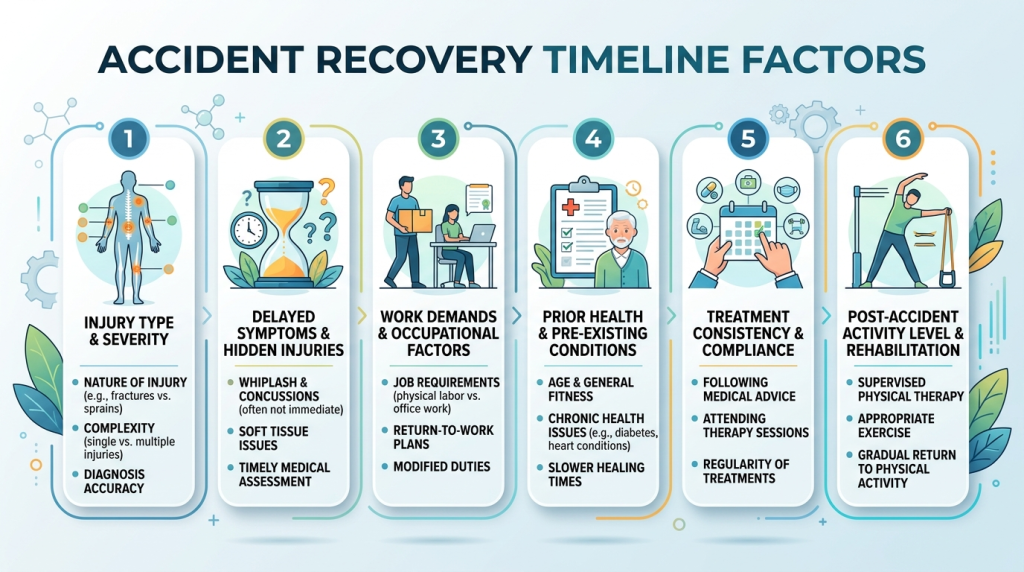
Factor 1: The Type of Injury
The type of injury is one of the biggest reasons recovery varies. Some injuries involve mild soreness, while others involve deeper soft tissue irritation, joint restriction, nerve-related symptoms, or mobility limitations.
Common accident-related injuries may include:
- Whiplash
- Neck pain
- Back pain
- Soft tissue injuries
- Headaches
- Shoulder pain
- Knee pain
- Hip pain
- Joint discomfort
- Muscle tightness
- Reduced range of motion
- Tingling or numbness
A patient with mild muscle soreness may recover faster than someone with persistent neck pain, back pain, headaches, or radiating symptoms. The more the injury affects movement and daily function, the more structured the recovery plan may need to be.
Factor 2: Delayed Symptoms
Many accident victims feel okay immediately after a crash. Adrenaline and stress can temporarily reduce pain awareness. Inflammation may also build up gradually, so symptoms can appear later.
Delayed symptoms may include:
- Neck stiffness
- Back soreness
- Headaches
- Shoulder pain
- Muscle tightness
- Reduced mobility
- Tingling or numbness
- Pain while sitting, standing, walking, or driving
- Trouble sleeping because of discomfort
This is one reason early monitoring matters. A patient whose symptoms appear two days later may not connect the pain to the accident right away. But delayed symptoms can still be accident-related and should not be ignored if they continue or worsen.
Factor 3: Whiplash and Neck Mobility
Whiplash can affect recovery because the neck plays a major role in driving, working, sleeping, posture, and daily movement. Even mild neck stiffness can make it harder to turn the head, check blind spots, sit at a desk, or sleep comfortably.
Whiplash symptoms may include:
- Neck pain
- Neck stiffness
- Headaches
- Shoulder or upper back pain
- Reduced range of motion
- Muscle tightness
- Tingling or numbness
Some patients recover steadily, while others experience flare-ups when they return to driving, work, or activity too quickly. Because symptoms may develop within days, patients should watch for neck pain, headaches, and stiffness after a crash.
Factor 4: Work and Daily Activity Demands
Recovery can look very different depending on what a patient does every day. A desk worker, delivery driver, warehouse employee, construction worker, caregiver, and retail worker may all place different demands on the body.
Work duties that may affect recovery include:
- Long periods of sitting
- Standing for long shifts
- Heavy lifting
- Repetitive bending
- Driving for work
- Carrying equipment
- Reaching overhead
- Twisting or turning
- Walking on hard surfaces
- Climbing stairs or ladders
MedlinePlus provides guidance on returning to work with back pain, including the importance of safer lifting, activity modification, and reducing the risk of reinjury.
A patient with a physically demanding job may need more activity modification than someone with flexible desk work. That does not mean one injury is always worse than the other. It means the recovery plan should match the patient’s real daily life.
Factor 5: Previous Injuries or Health History
A patient’s history of injuries can affect recovery. Previous neck pain, back pain, joint injuries, sports injuries, workplace injuries, or prior car accidents may influence how the body responds after a new crash.
Health factors may also matter, including:
- Previous spine or joint problems
- Existing muscle weakness
- Limited flexibility
- Chronic pain history
- Prior surgery
- Age-related mobility changes
- Overall activity level
- Sleep quality
- Stress level
This is why a detailed evaluation should include more than the current pain. The provider should also ask about previous injuries, lifestyle, job duties, and recovery goals.
Factor 6: How Soon Care Begins
Early evaluation may help identify injury patterns, document symptoms, and guide the next step. Some patients wait because they hope symptoms will go away. Others are focused on vehicle damage, insurance calls, family responsibilities, or missed work.
Waiting too long may make stiffness, inflammation, and movement limitations harder to manage. Early care does not guarantee a faster recovery, but it can help patients understand what is happening and avoid guessing.
An accident-focused evaluation may include:
- A discussion about the crash
- Review of symptoms
- Review of when symptoms started
- Neck, back, and joint mobility assessment
- Range-of-motion checks
- Pain and tenderness evaluation
- Functional movement review
- Treatment recommendations
- Recovery plan discussion
- Documentation of accident-related findings
Factor 7: Consistency With the Recovery Plan
Consistency can affect recovery. Some patients begin care but stop once pain decreases, even though stiffness or mobility limitations remain. Others miss visits due to transportation issues, work schedules, or uncertainty about the process.
A structured recovery plan may include:
- Chiropractic care
- Rehabilitation therapy
- Soft tissue support
- Mobility exercises
- Stretching
- Strengthening
- Progress monitoring
- Activity modification
- Follow-up evaluations
Recovery is not always a straight line. Symptoms may improve, flare up, or shift depending on activity and healing. Regular progress monitoring helps determine whether the plan should be adjusted.
Recovery Timeline: Why It Varies
Every patient’s recovery timeline is different. The table below explains why one patient may improve quickly while another may need more time.
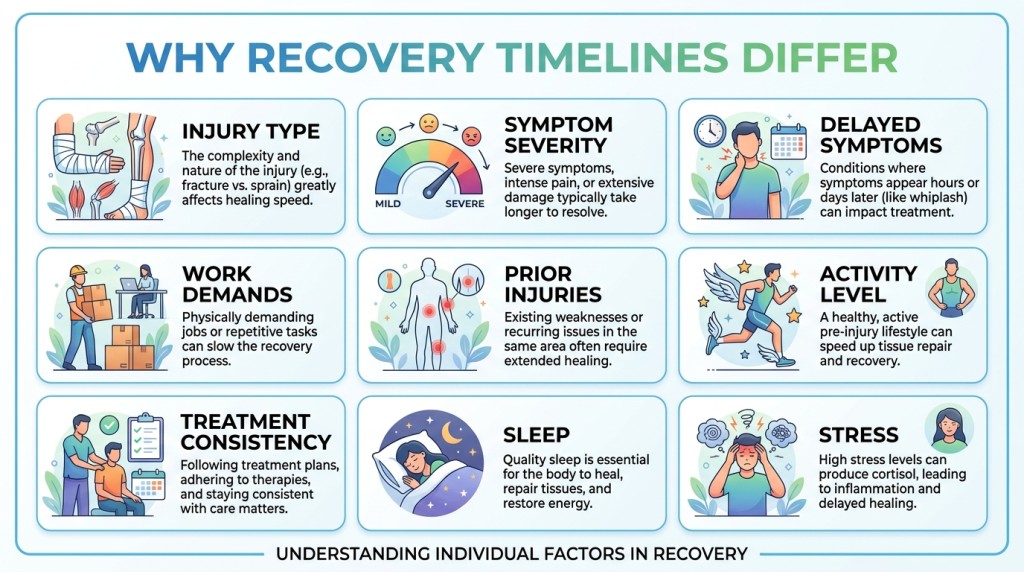
| Recovery Factor | Why It Matters |
| Injury type | Whiplash, back pain, soft tissue injuries, and joint pain may recover at different speeds. |
| Symptom severity | Mild soreness may improve faster than pain that limits movement or daily activity. |
| Delayed symptoms | Pain that appears later may delay evaluation and treatment. |
| Work demands | Heavy lifting, long driving, and standing may slow recovery if not modified. |
| Prior injuries | Previous neck, back, or joint problems may affect healing. |
| Activity level | Returning to exercise or work too quickly may increase symptoms. |
| Treatment consistency | Follow-up visits and rehab participation can affect progress. |
| Sleep and stress | Poor sleep and high stress may make recovery feel harder. |
The goal is not to compare timelines. The goal is to follow a recovery plan that matches the patient’s condition and daily needs.
Signs Recovery May Need More Support
Some soreness after an accident may improve with time, but certain symptoms should not be ignored.
You may need additional evaluation if you notice:
- Pain that gets worse instead of better
- Neck pain that limits driving
- Back pain that affects sitting or standing
- Headaches after the crash
- Tingling or numbness
- Weakness in the arms or legs
- Stiffness that does not improve
- Pain that interrupts sleep
- Reduced range of motion
- Symptoms that flare with work or exercise
- Pain that affects normal daily tasks
These signs may mean the body needs a more structured recovery plan.
What a Personalized Recovery Plan May Include
A personalized recovery plan should be based on the patient’s symptoms, injury type, mobility limitations, work demands, activity goals, and progress.
At Premier Injury Clinics of DFW’s Forest Hill location, care may include accident-focused evaluation, chiropractic care, rehabilitation therapy, soft tissue support, and progress monitoring.
Chiropractic Care
Chiropractic care may help address spinal and joint mobility problems after a crash. When the neck, back, or joints are affected by sudden impact, patients may experience pain, stiffness, and reduced movement.
Rehabilitation Therapy
Rehabilitation therapy may include stretching, strengthening, mobility exercises, stability work, and progressive care designed to help restore function after an injury.
Soft Tissue Support
Soft tissue injuries can affect muscles, ligaments, and tendons. Supportive care may help reduce tightness, improve comfort, and support the range of motion.
Progress Monitoring
Progress monitoring helps determine whether symptoms are improving, whether treatment should be adjusted, and whether activity levels should change.

Local Recovery Support in Forest Hill
Local care can make recovery easier to manage. Accident injury recovery may require multiple visits, and a nearby clinic can help patients stay consistent with care.
Premier Injury Clinics of DFW’s Forest Hill location serves patients from:
- Forest Hill
- Fort Worth
- Everman
- Kennedale
- Edgecliff Village
- Burleson
- Nearby Tarrant County communities
The Forest Hill clinic is located at:
3501 Forest Hill Cir
Forest Hill, TX 76140
This local access can be helpful for patients who live, work, or commute near I-20, I-35W, Loop 820, Wichita Street, Mansfield Highway, Forest Hill Drive, and nearby local routes.
Transportation assistance may be available for qualifying patients recovering after a car accident, which can be helpful if the vehicle was damaged or if driving is uncomfortable.
Red Flags: When to Seek Emergency Care
Chiropractic care and rehabilitation therapy may help many accident-related musculoskeletal injuries, but some symptoms require emergency medical attention.
The CDC lists danger signs after a possible traumatic brain injury, including worsening headache, repeated vomiting, weakness, numbness, seizures, slurred speech, confusion, unusual behavior, unequal pupils, or loss of consciousness.
Seek emergency care immediately if you experience:
- Loss of consciousness
- Chest pain
- Trouble breathing
- Severe or worsening headache
- Confusion
- Repeated vomiting
- Weakness on one side of the body
- Slurred speech
- Heavy bleeding
- Severe abdominal pain
- Severe neck or back pain after trauma
- Numbness or weakness in the arms or legs
- Loss of bladder or bowel control
When in doubt, choose emergency care first. Once serious conditions are ruled out, accident injury treatment and rehabilitation may be part of the next step.
Frequently Asked Questions
Why do some people recover faster after an accident?
Some people recover faster because their injuries may be less severe, symptoms may be evaluated earlier, daily activity demands may be lower, or they may respond quickly to a structured recovery plan. Recovery also depends on health history, mobility, work demands, and consistency with care.
Is delayed pain normal after a car accident?
Delayed pain is common after a crash. Symptoms such as neck pain, back pain, headaches, stiffness, soreness, and reduced mobility may appear hours or days later. If symptoms continue or worsen, an evaluation may help identify the next step.
Can two people in the same crash have different injuries?
Yes. Seat position, body position, impact direction, seatbelt placement, bracing, prior injuries, and health history can all affect how each person is injured.
What can slow down accident recovery?
Recovery may be slowed by delayed evaluation, severe symptoms, prior injuries, physically demanding work, poor sleep, high stress, inconsistent care, or returning too quickly to heavy activity.
Should I compare my recovery timeline to someone else’s?
No. Recovery should be based on your symptoms, injury pattern, daily responsibilities, and progress. Comparing timelines can create frustration because every patient heals differently.
When should I see an injury provider after a crash?
You should consider an evaluation if you develop neck pain, back pain, headaches, stiffness, soreness, numbness, tingling, reduced mobility, or pain that affects work, driving, sleep, or daily activities.
Does Premier Injury Clinics of DFW serve Forest Hill?
Yes. The Forest Hill location serves patients from Forest Hill, Fort Worth, Everman, Kennedale, Edgecliff Village, Burleson, and nearby Tarrant County communities.
Final Thoughts
Recovery is different for every patient because every accident, injury, body, and daily routine is different. Some patients may recover quickly, while others need more time due to pain, stiffness, delayed symptom onset, prior injuries, work demands, or mobility limitations.
The most important step is to avoid comparing your recovery to someone else’s. Instead, pay attention to your symptoms, get evaluated when pain occurs, and follow a recovery plan tailored to your condition.
Premier Injury Clinics of DFW provides accident-focused evaluations, chiropractic care, rehabilitation therapy, same-day appointments when available, structured recovery plans, and transportation assistance for qualifying patients recovering after car accidents in Forest Hill and nearby Tarrant County communities.Visit the Premier Injury Clinics of DFW Forest Hill location page to learn more about injury evaluations, chiropractic care, rehabilitation therapy, and recovery support after a car accident.
About the Author