
A car accident in San Antonio can leave drivers and passengers dealing with medical treatment, vehicle repairs, missed work, insurance calls, and uncertainty about what to do next. Whether the crash happened on a highway, frontage road, neighborhood street, parking lot, or busy intersection, the steps taken afterward can affect both recovery and any potential injury claim. This guide explains how San Antonio car accident claims usually work and what information may help protect your options.
Quick Answer
After a car accident in San Antonio, check for injuries, call 911 if anyone is hurt or the crash is serious, exchange driver and insurance information, take photos, collect witness details, seek medical care, and report the crash to your insurance company. If the crash caused injuries, disputed fault, missed work, or insurance delays, it may help to speak with a car accident lawyer san antonio residents can contact before accepting a settlement.
A car accident claim may involve medical bills, lost wages, vehicle damage, pain and suffering, future care needs, and questions about who was legally responsible for the crash.
Key Takeaways
- San Antonio car accident claims often involve fault, insurance coverage, medical documentation, repair costs, lost income, and settlement negotiations.
- Crashes may happen on I-35, I-10, Loop 410, Loop 1604, Highway 281, downtown streets, frontage roads, school zones, parking lots, and busy intersections.
- Important evidence may include crash reports, scene photos, witness details, medical records, repair estimates, dashcam footage, insurance messages, and proof of missed work.
- Texas law generally gives injured people a limited time to file a personal injury lawsuit.
- Insurance companies may review treatment timelines, vehicle damage, prior medical history, recorded statements, and shared fault before making an offer.
Why San Antonio Car Accident Claims Can Become Complicated
San Antonio drivers share the road with commuters, commercial trucks, rideshare vehicles, delivery drivers, tourists, military traffic, construction crews, and people traveling across Bexar County and South Texas. Heavy traffic on major routes like I-35, I-10, Loop 410, Loop 1604, and Highway 281 can create crash risks, especially during rush hours, bad weather, construction changes, and holiday travel.
A crash may seem simple at first, but complications can appear quickly. The other driver may deny responsibility. The insurance company may argue that the impact was minor. Pain may appear days after the crash. A vehicle may be declared a total loss. Medical bills may continue to arrive. A commercial vehicle, rideshare driver, uninsured motorist, or multi-vehicle crash may create additional insurance questions.
For injured drivers and passengers, a claim is not only about proving that a crash happened. It is about documenting how the crash affected health, income, transportation, family responsibilities, and daily life.
Common Causes of Car Accidents in San Antonio
Car accidents can happen for many reasons. Some crashes are caused by one clear mistake, while others involve several contributing factors.
Common causes include:
- Distracted driving
- Speeding
- Tailgating
- Drunk or drug-impaired driving
- Unsafe lane changes
- Running red lights
- Failure to yield
- Aggressive driving
- Fatigued driving
- Poor weather conditions
- Construction-zone confusion
- Unsafe turns
- Failure to check blind spots
- Following too closely in stop-and-go traffic
In San Antonio, crash risks may increase around highway merges, frontage roads, construction corridors, school zones, downtown entertainment areas, shopping centers, military-area traffic, and intersections with heavy turning movement.
What to Do Immediately After a San Antonio Car Accident
1. Check for Injuries and Move to Safety
Start by checking yourself, your passengers, and anyone else involved. If someone is injured, call 911. If the vehicles can be moved safely, move out of active traffic and turn on hazard lights.
Do not ignore symptoms such as headaches, dizziness, confusion, neck pain, back pain, numbness, shoulder pain, chest pain, or shortness of breath. Some injuries are not obvious at the scene because adrenaline can mask pain.
2. Call Police When Appropriate
Police should usually be called if someone is injured, a driver leaves the scene, intoxication is suspected, vehicles cannot be safely driven, or drivers disagree about what happened.
A crash report may include:
- Driver information
- Insurance details
- Vehicle information
- Crash location
- Witness information
- Citations
- Officer observations
- Road or weather conditions
For Texas crash documentation, the Texas Department of Transportation provides official information on crash reports and records.
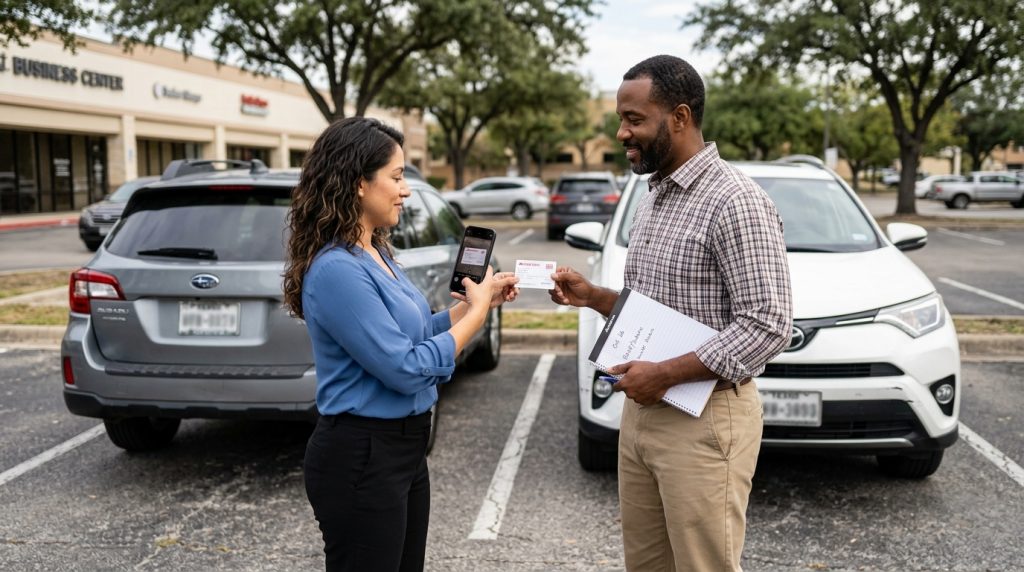
3. Exchange Driver and Insurance Information
Collect the other driver’s:
- Name
- Phone number
- Driver’s license information
- License plate number
- Insurance company
- Policy number
- Vehicle make, model, and color
Avoid arguing about fault at the scene. Keep the conversation factual and focused on exchanging information.
4. Take Photos and Videos
Photos can preserve details before vehicles are moved, repairs begin, or road conditions change.
If it is safe, document:
- Vehicle positions
- Damage to all vehicles
- License plates
- Traffic lights and signs
- Skid marks
- Debris
- Road layout
- Weather conditions
- Construction signs or cones
- Visible injuries
- Nearby businesses or cameras
- The wider crash scene
A short video can also help show traffic flow, vehicle positions, road conditions, and the surrounding area.
5. Collect Witness Details
Witnesses can be important if the other driver later changes their story or the insurance company disputes fault. Ask for names, phone numbers, email addresses, and a brief explanation of what they saw.
Witnesses may include passengers, pedestrians, nearby workers, other drivers, security staff, parking attendants, or people at surrounding businesses.
6. Seek Medical Care
Medical care protects your health and creates documentation of your injuries. Some crash-related injuries develop slowly, including whiplash, concussions, back injuries, shoulder injuries, soft tissue injuries, and nerve symptoms.
The Texas Department of Insurance recommends collecting information, taking pictures, reporting the accident, and keeping medical records and bills in its auto insurance claim tips after a wreck.
Common Injuries After San Antonio Car Accidents
Car accident injuries can range from temporary soreness to long-term disability.
Common injuries include:
- Whiplash
- Neck injuries
- Back injuries
- Concussions
- Broken bones
- Shoulder injuries
- Knee injuries
- Wrist and hand injuries
- Internal injuries
- Cuts and bruising
- Burns
- Spinal cord injuries
- Traumatic brain injuries
- Anxiety, sleep disruption, or emotional distress
Even if symptoms seem mild at first, it is important to monitor changes and follow medical advice. Some injuries become clearer only after imaging, specialist evaluation, or physical therapy.
How San Antonio Car Accident Claims Usually Work
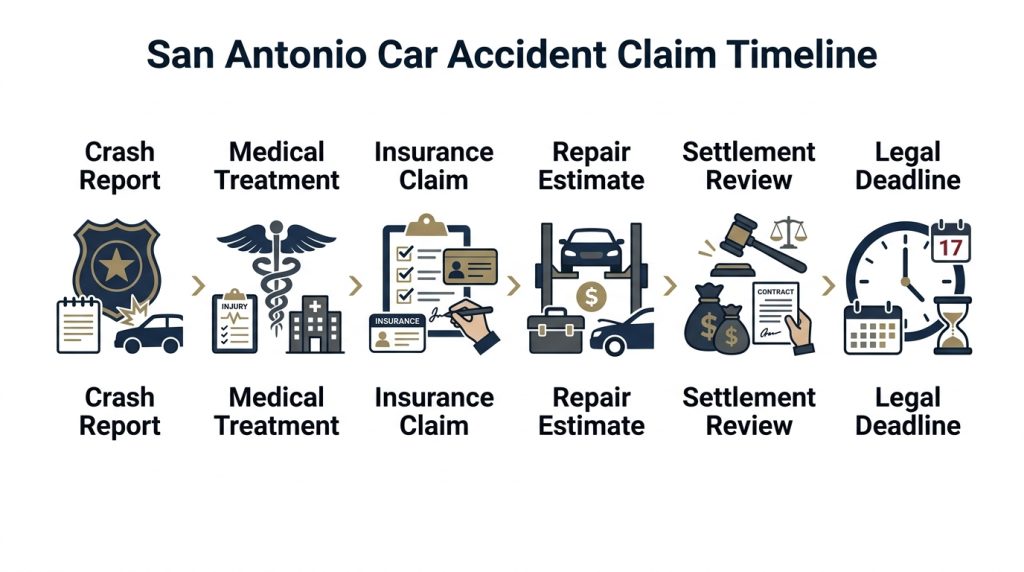
Every case is different, but many car accident claims follow a similar process.
Step 1: Initial Documentation
The first stage involves documenting the crash, injuries, and damages. This may include photos, crash reports, insurance information, medical records, repair estimates, and witness details.
Step 2: Medical Treatment
The injured person gets medical care and follows treatment recommendations. The value of the claim often depends on injury severity, length of treatment, future care needs, and how the injury affects daily life.
Step 3: Insurance Claim
The injured person or their attorney submits a claim to the responsible driver’s insurance company. The insurer reviews liability, damages, policy limits, and supporting evidence.
Step 4: Claim Evaluation
The insurance company may review medical records, vehicle damage, statements, prior medical history, and fault arguments. It may accept the claim, deny it, delay it, or make a settlement offer.
Step 5: Settlement Negotiation
Many car accident claims settle through negotiation. A fair settlement should consider the full impact of the crash, not only the first medical bill or repair estimate.
Step 6: Lawsuit, If Needed
If the insurer refuses to make a fair offer or disputes responsibility, filing a lawsuit may become necessary. A lawsuit does not always mean a trial will happen, but it may be needed to protect the claim before legal deadlines expire.
How Insurance Companies Evaluate San Antonio Car Accident Claims
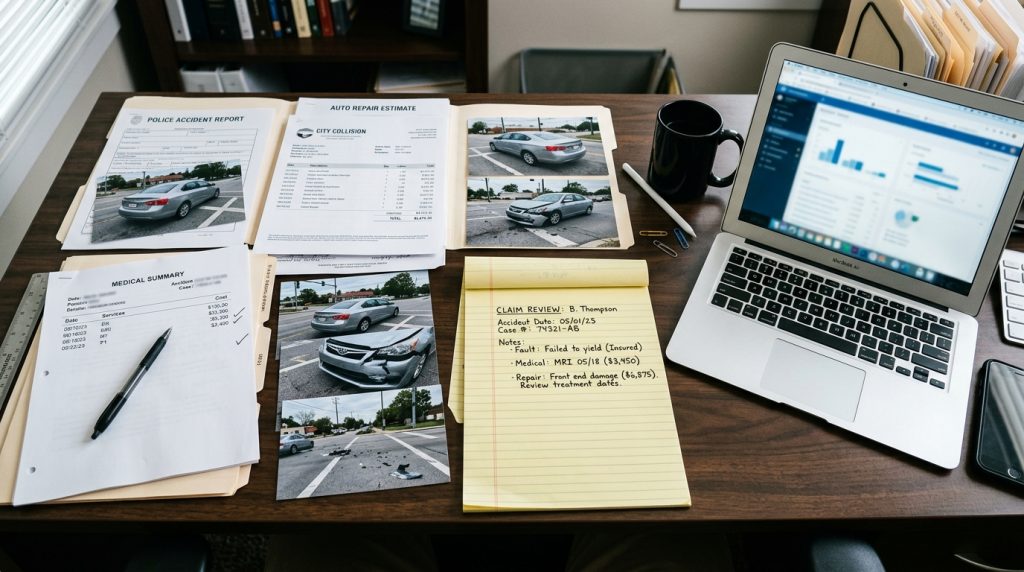
Insurance companies review claims from a business perspective. Their goal is to evaluate risk, coverage, and potential payout.
They may consider:
- Who appears to be at fault
- Whether police were called
- Whether photos or videos exist
- Whether witnesses support the claim
- Whether medical care began quickly
- The seriousness of the injuries
- Whether treatment was consistent
- Whether the injured person had prior medical problems
- The amount of vehicle damage
- Available insurance coverage
- Statements made by the drivers
- Whether the injured person may share fault
An insurer may argue that the crash was minor, treatment was delayed, injuries were pre-existing, or the injured person was partly responsible. Clear documentation can help respond to those arguments.
What Evidence Can Strengthen a Car Accident Claim?
A strong car accident claim depends on clear, organized evidence. The more documentation available, the easier it may be to explain what happened and how the crash affected the injured person.
Helpful evidence may include:
- Police crash report
- Photos from the scene
- Videos from the scene
- Dashcam footage
- Surveillance footage
- Witness statements
- Medical records
- Medical bills
- Prescription receipts
- Physical therapy records
- Repair estimates
- Rental car receipts
- Proof of missed work
- Insurance emails and letters
- Pain journal or recovery notes
- Records of transportation costs
- Photos of visible injuries
Evidence can disappear quickly. Vehicles get repaired, camera footage may be overwritten, witnesses may become harder to reach, and road conditions may change.
Texas Laws That Can Affect a Car Accident Claim
Statute of Limitations
Texas has strict deadlines for personal injury lawsuits. In many cases, a person must bring a personal injury lawsuit within two years from the date the cause of action accrues under Texas Civil Practice and Remedies Code Section 16.003.
This does not mean an injured person should wait. Evidence may disappear, insurance disputes can take time, and some cases may involve shorter notice rules, especially if a government vehicle, public employee, or public entity is involved.
Shared Fault
Texas uses a proportionate responsibility system. If the injured person is partly responsible, compensation may be reduced by that percentage. If the injured person’s share of responsibility is too high, recovery may be barred.
This is one reason evidence matters. Insurance companies may try to argue that the injured person was speeding, distracted, following too closely, failed to avoid the crash, or made symptoms worse by delaying treatment.
What Compensation May Be Available?
Compensation depends on the facts of the crash, the evidence, the severity of the injuries, and the available insurance coverage.
A car accident claim may include compensation for:
- Emergency medical care
- Hospital bills
- Surgery
- Doctor visits
- Physical therapy
- Prescription medication
- Future medical treatment
- Lost wages
- Reduced earning ability
- Vehicle repairs
- Rental car expenses
- Towing and storage costs
- Property damage
- Pain and suffering
- Emotional distress
- Loss of enjoyment of life
- Permanent impairment or disability
A settlement should consider both current losses and future consequences. Accepting a quick offer before treatment is complete can be risky if symptoms worsen later.
When Should You Contact a Lawyer?
Some minor crashes can be handled directly through insurance. However, legal guidance may be useful when the accident creates medical, financial, or liability problems.
Consider speaking with a lawyer if:
- You needed emergency medical care
- You were hospitalized
- You missed work
- Fault is disputed
- The other driver was uninsured or underinsured
- The insurance company is delaying the claim
- You were blamed for a crash you did not cause
- A rideshare, delivery, or commercial vehicle was involved
- Your vehicle was totaled
- You need ongoing treatment
- The settlement offer seems too low
- A pedestrian, cyclist, motorcyclist, or child was injured
- A loved one suffered a fatal injury
People comparing options for a san antonio car accident lawyer should look for guidance that explains the process clearly, discusses evidence realistically, and does not pressure them into rushed decisions.
Common Mistakes That Can Hurt a Car Accident Claim
Avoid these common mistakes after a crash:
- Leaving the scene too quickly
- Failing to report the crash when needed
- Not getting medical care
- Missing follow-up appointments
- Forgetting to take photos
- Losing witness information
- Giving broad recorded statements
- Guessing about speed, distance, or injuries
- Accepting blame before all facts are known
- Posting about the crash on social media
- Signing a release too early
- Throwing away damaged property
- Waiting too long to ask questions
Small mistakes can give insurance companies reasons to reduce, delay, or deny a claim.
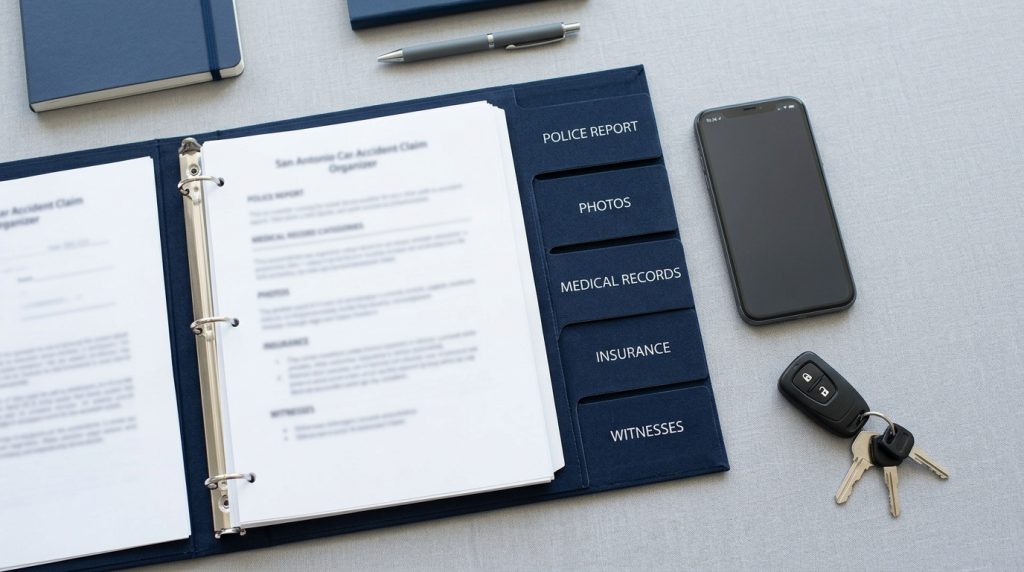
San Antonio Car Accident Claim Checklist
Use this checklist after a crash:
- Check for injuries
- Call 911 if needed
- Move to safety if possible
- Exchange driver and insurance information
- Take photos and videos
- Collect witness details
- Get medical care
- Report the crash to insurance
- Save all medical records and bills
- Keep repair estimates and rental receipts
- Track missed work
- Save insurance emails and letters
- Avoid quick settlement decisions
- Ask about legal deadlines early
FAQ
What should I do first after a car accident in San Antonio?
Check for injuries, move to safety if possible, call 911 when needed, exchange information, take photos, collect witness details, and seek medical care. Documentation is important from the beginning.
Do I need a police report for a car accident claim?
A police report can be helpful, especially when someone is injured, fault is disputed, a driver leaves the scene, or vehicles are badly damaged. The report may help document facts that insurance companies later review.
Should I accept the insurance company’s first offer?
Not without understanding the full value of the claim. Early offers may not include future medical care, lost earning ability, long-term pain, or complications that appear after the initial settlement discussion.
What if I feel pain days after the crash?
Delayed symptoms are common. You should seek medical care and explain when the crash happened and when symptoms began. Medical documentation can help connect symptoms to the accident.
Can I recover compensation if I was partly at fault?
Possibly. Texas fault rules may reduce compensation based on responsibility. If your percentage of fault is too high, recovery may be barred. Evidence is especially important when fault is disputed.
How long does a car accident claim take?
The timeline depends on injury severity, medical treatment, insurance cooperation, disputed fault, available evidence, and whether a lawsuit is needed. Some claims resolve in months, while more serious cases can take longer.
What documents should I save after a crash?
Save photos, police report details, insurance information, medical records, medical bills, repair estimates, rental receipts, witness details, and all communication from insurance companies.
What if the other driver does not have insurance?
You may still have options depending on your own insurance coverage and the facts of the crash. Uninsured or underinsured motorist coverage may become important in these situations.
Final Thoughts
A San Antonio car accident can create physical, financial, and emotional pressure very quickly. The steps taken after the crash can affect medical recovery, insurance communication, and the strength of a potential claim.
The most important actions are to get medical care, document the scene, preserve evidence, understand insurance communications, and avoid rushing into a settlement before the full impact is clear. This guide is for general informational purposes only and is not legal advice. Anyone dealing with a specific car accident claim should speak with a qualified legal professional about their situation.
About the Author