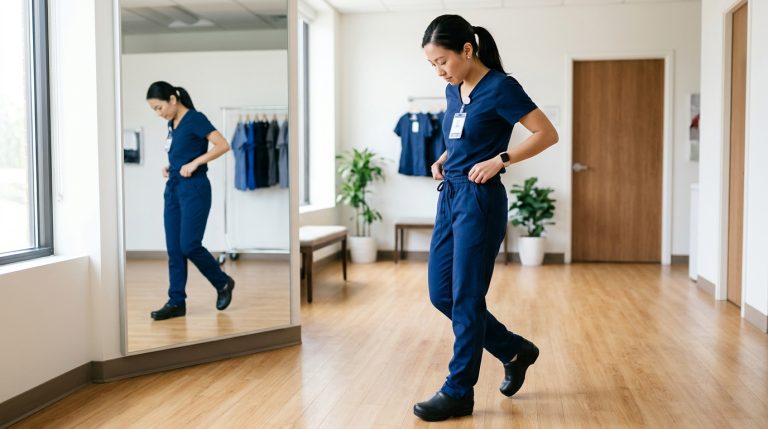
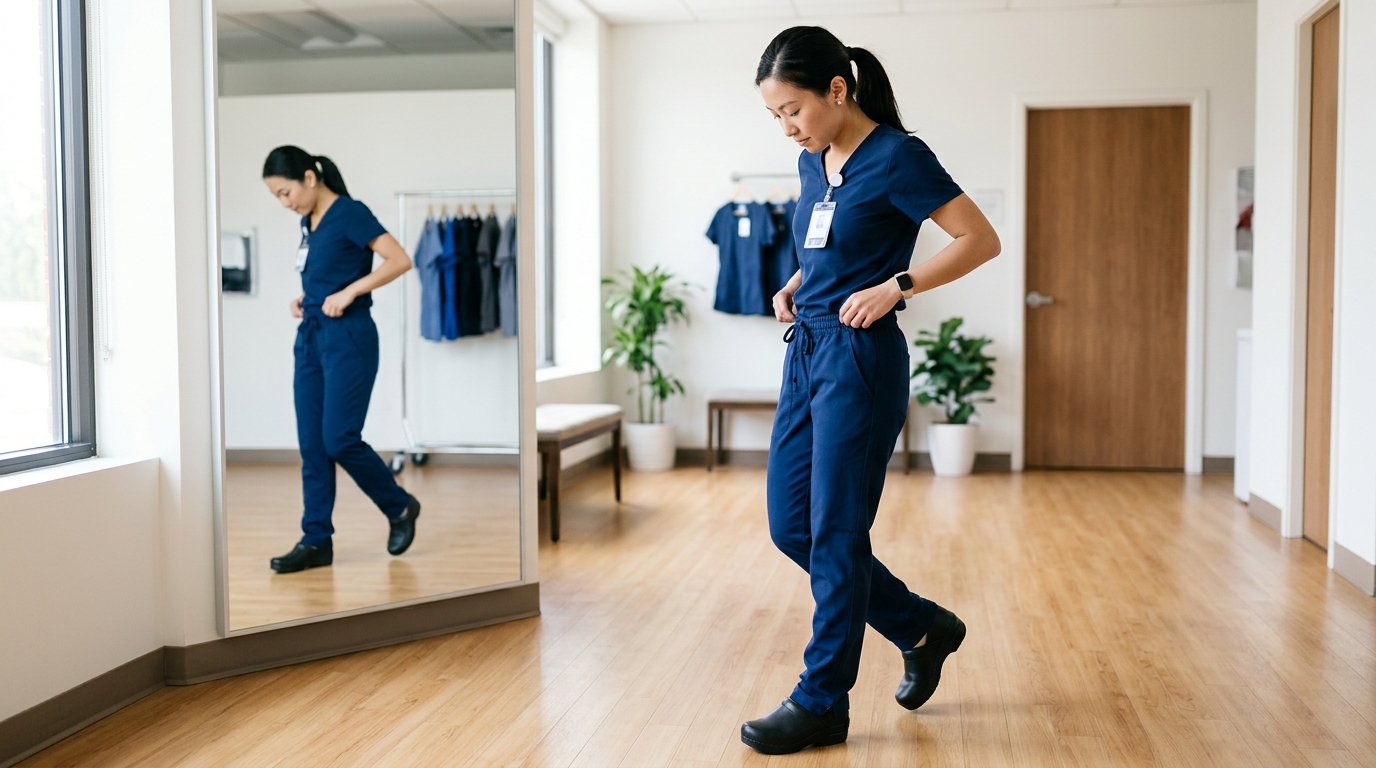
Tall scrub pants should help healthcare workers move comfortably without feeling too short, pulling at the knees, or creating an awkward cropped look. Nurses, CNAs, medical assistants, dental workers, veterinary staff, healthcare students, and clinic employees often need scrub pants that fit correctly through the waist, hips, thighs, knees, and inseam.
For taller workers, pant length affects comfort, coverage, movement, and professional appearance throughout the shift. Workers comparing tall scrub pants should evaluate inseam, waistband style, pant rise, leg shape, fabric stretch, pocket placement, work shoes, and workplace dress code before buying multiple pairs.
Quick Answer
The best tall scrub pants for women offer a longer inseam, comfortable waistband, proper rise, movement-friendly fabric, useful pockets, and a professional leg shape that works with healthcare shoes. Buyers should check whether the pants look too short, pull at the knees, ride up while sitting, or expose too much ankle during movement.
Healthcare workers choosing tall scrub pants should review:
- Tall inseam length
- Waistband comfort
- Pant rise and seated coverage
- Hip, thigh, and knee movement
- Jogger, straight-leg, tapered, cargo, flare, or bootcut style
- Pocket number and placement
- Fabric stretch and recovery
- Breathability during long shifts
- Work-shoe compatibility
- Workplace-approved colors
- Care instructions
- Return or exchange policy before buying several pairs
Why Tall Scrub Pants Matter
Tall scrub pants are not just regular scrub pants in a larger size. The main issue is length and proportion. A taller healthcare worker may need a longer inseam, correct knee placement, enough rise, and a leg shape that does not look cropped or feel restrictive.
Regular-length pants can create problems such as:
- Ankles showing too much while standing
- Pants riding up while sitting
- Knee seams sitting too high
- Tightness through the thighs or calves
- An unbalanced look with scrub tops
- Less professional appearance
- Discomfort when bending or walking
- Frequent pant adjustments during work
Workers comparing tall length scrub pants should focus on how the pants fit during real movement, not only how they look in product photos.
Inseam Is the First Detail to Check
Inseam is the length from the crotch seam to the bottom hem of the pant. For tall scrub pants, inseam is usually the most important measurement because it determines whether the pant falls correctly with work shoes.
Healthcare workers should check:
- The listed tall inseam
- Whether the hem reaches the right point on the shoe
- Whether the pant looks cropped while standing
- Whether the pant rides up too much while sitting
- Whether jogger cuffs sit comfortably
- Whether straight-leg hems look long enough
- Whether flare or bootcut hems break properly over shoes
- Whether the length still works after washing
Trying on scrub pants with normal work shoes gives the most accurate fit. Sneakers, clogs, and supportive healthcare shoes can all change how the hem sits.
Tall Fit Should Support the Whole Body
A tall pant should not only be longer. It should still fit properly through the waist, hips, thighs, knees, and rise. A pant can have the right inseam but still feel uncomfortable if the waistband digs, the rise feels too short, or the knees pull during movement.
A good tall scrub pant should allow:
- Easy walking
- Comfortable sitting
- Secure waist support
- Bending without pulling
- Knee movement without restriction
- Enough hip and thigh room
- Professional appearance with scrub tops
- Pocket access without awkward placement
The best tall scrub pants should feel proportionate from waist to hem.
Waistband Comfort Comes First
Waistband comfort is important for every scrub pant. For taller workers, waistband position and pant rise can affect how secure and comfortable the pants feel during the day.
Common waistband styles include:
- Full elastic waistbands
- Drawstring waistbands
- Knit waistbands
- Yoga-style waistbands
- Half-elastic waistbands
- Rib-knit waistbands
- Zip-fly waistbands
- Elastic and drawstring combinations
A good waistband should stay secure without rolling, digging, slipping, or folding. Healthcare workers should test the waistband while sitting, bending, walking, and carrying items in pockets.
Pant Rise Affects Coverage and Proportion
Pant rise refers to how high the waistband sits on the body. Rise affects coverage, seated comfort, and how the pants pair with scrub tops.
Low-rise tall scrub pants
Low-rise pants may feel comfortable for some workers, but they can create coverage concerns while bending or sitting. They may also feel too short in the rise for taller frames.
Mid-rise tall scrub pants
Mid-rise pants often provide a balanced fit. They can work well with many scrub tops and may feel comfortable for everyday clinical movement.
High-rise tall scrub pants
High-rise pants may provide more coverage and a secure waist feel. They can work well with tuckable tops or workers who prefer more support through the waist.
The best rise depends on body type, scrub top style, workplace expectations, and movement needs.
Leg Shape Can Change Tall Fit
The leg shape of scrub pants affects how tall pants look and feel. Some styles emphasize length, while others require more careful fit checks.
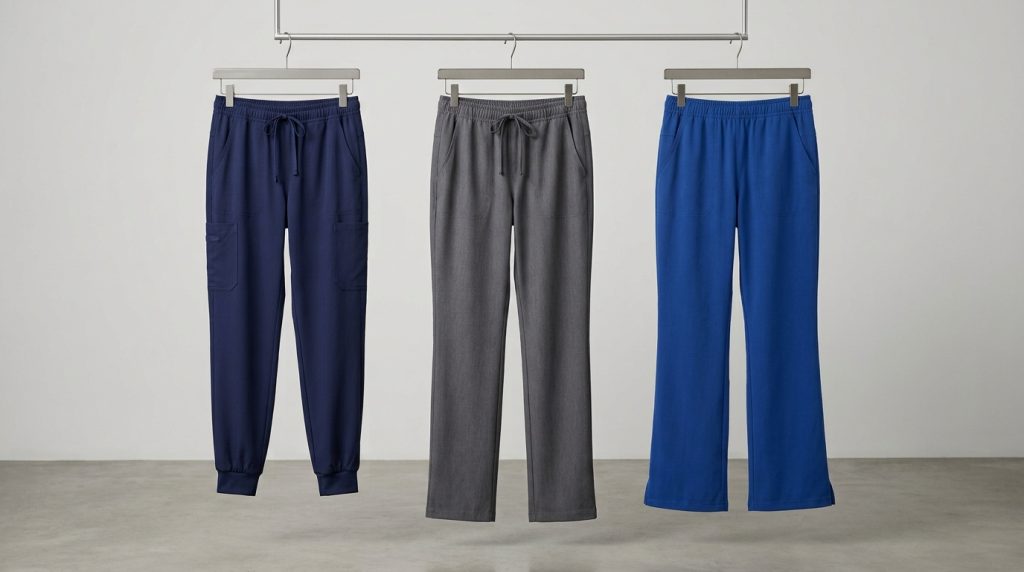
Tall jogger scrub pants
Joggers have cuffed ankles. They can look modern and reduce dragging, but taller workers should make sure the cuff does not sit too high above the ankle.
Tall straight-leg scrub pants
Straight-leg pants offer a classic clinical look. They should reach the right point on the shoe without looking cropped.
Tall tapered scrub pants
Tapered pants can create a clean lower-leg shape. Taller workers should check that the taper does not feel tight around the calf or ankle.
Tall cargo scrub pants
Cargo pants offer more storage, but pocket placement should be checked so the pockets sit comfortably on the thigh.
Tall flare or bootcut scrub pants
Flare and bootcut pants can look polished when the inseam is correct. Wider hems should break cleanly over shoes without dragging.
Workers comparing tall scrubs near me should choose leg shape based on body proportion, work shoes, workplace policy, and daily movement.
Work Shoes Affect Tall Pant Length
Tall scrub pants should always be checked with the shoes normally worn at work. A pant that looks acceptable barefoot may feel too short with higher-support shoes or clogs.
Healthcare workers should check:
- Whether straight-leg hems reach the correct point
- Whether jogger cuffs sit too high
- Whether flare pants break cleanly over shoes
- Whether pants ride up too much while sitting
- Whether the inseam still looks professional while walking
- Whether the pant catches or pulls around the shoe
- Whether the length stays appropriate after laundering
The right length should allow safe movement while still looking polished.
Fabric Stretch Supports Clinical Movement
Tall scrub pants should support sitting, standing, bending, reaching, walking, climbing stairs, and carrying items. Fabric stretch can be especially helpful when longer limbs require more room through the knees, thighs, and calves.
Stretch can help during:
- Walking between rooms
- Sitting and standing repeatedly
- Bending during patient care
- Reaching for supplies
- Leaning during dental or veterinary work
- Carrying items in pockets
- Moving quickly during clinic tasks
- Working long shifts
Stretch should also recover well. Fabric that stretches but does not return to shape may look baggy or feel loose after several hours.
Breathability Matters During Long Shifts
Breathability affects how scrub pants feel during warm, active, or layered shifts. Healthcare workers may move between exam rooms, treatment areas, reception areas, supply rooms, labs, and break rooms with different temperatures.
NIOSH has discussed how prolonged standing at work can contribute to fatigue, leg discomfort, swelling, and low back discomfort. Scrub pants cannot solve those workplace issues by themselves, but breathable, well-fitting workwear can help reduce avoidable uniform-related irritation during long shifts. More context is available from NIOSH’s resource on prolonged standing at work.
Breathable tall scrub pants may be useful for:
- Long clinical shifts
- Fast-paced outpatient settings
- Warm work environments
- Dental and veterinary teams
- Healthcare students during clinical rotations
- Workers who walk or stand frequently
- Staff who layer underscrubs during cooler months
Breathability should still be balanced with coverage, durability, and professional appearance.
Pocket Placement Should Be Checked Carefully
Pocket placement affects both function and fit. Taller workers should check whether front, cargo, and back pockets sit comfortably and remain easy to access during movement.
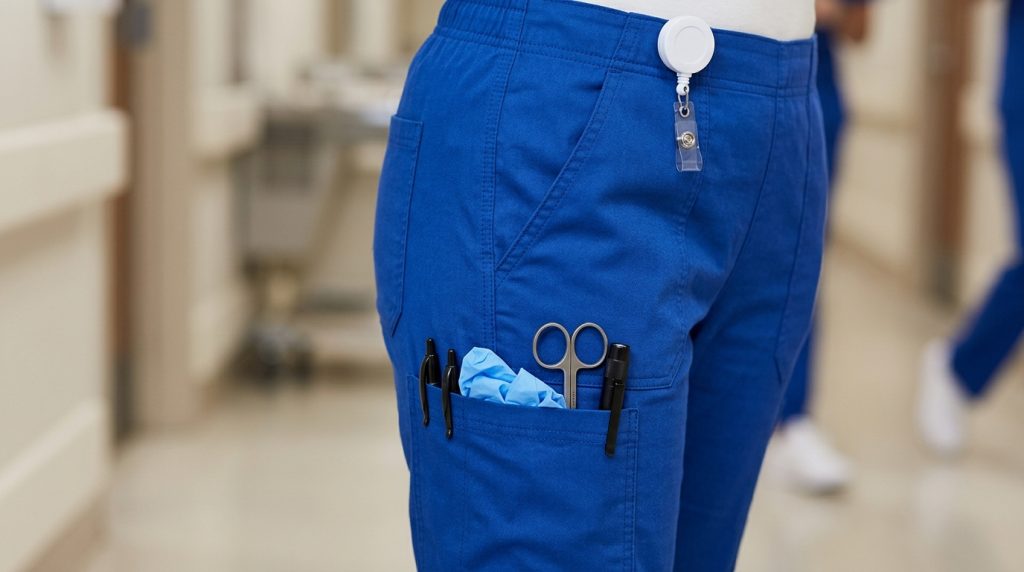
ALT: Tall scrub pant pockets with healthcare essentials
Healthcare workers may carry:
- Pens
- Badge reel
- Phone
- Small notebook
- Gloves
- Alcohol pads
- Tape
- Scissors
- Penlight
- Keys
- Stethoscope accessories
- Small clinical tools
Before buying tall scrub pants, workers should check:
- Front pocket depth
- Cargo pocket height
- Back pocket usefulness
- Zippered pocket security
- Pen slot placement
- Whether pockets sag when filled
- Whether pockets hit the thigh or knee while walking
- Whether pockets interfere with sitting
- Whether storage is balanced between top and pants
A tall pant should provide storage without disrupting movement or looking bulky.
Cargo Pockets Can Help, But Placement Matters
Cargo pockets are useful for many healthcare roles, but placement matters. If the pocket sits too high, too low, or too far back, it may feel awkward while walking, bending, or sitting.
Cargo pockets may be helpful for:
- Nurses
- CNAs
- Medical assistants
- Veterinary technicians
- Dental assistants
- Healthcare students
- Workers who carry phones or tools
- Staff who prefer pants-based storage
Minimal-pocket tall pants may work better for:
- Providers wearing lab coats
- Workers who prefer a cleaner silhouette
- Front-office clinical employees
- Staff with strict dress codes
- Workers who carry fewer tools
The best pocket layout should match the role without disrupting comfort.
Tall Scrub Pants Should Pair Well With Tops
Scrub pants and tops should work together. A tall pant may fit well alone but look unbalanced with a top that is too short, too long, or too boxy.
Healthcare workers should consider:
- Whether the top is tucked or untucked
- Whether the pant rise works with the top length
- Whether pockets remain accessible
- Whether the colors match
- Whether the full silhouette looks professional
- Whether the scrub top provides enough coverage
- Whether jacket or lab coat layers affect proportion
The full scrub set should look clean and feel comfortable during movement.
Workplace Dress Codes Come First
Before buying tall scrub pants, healthcare workers should confirm workplace or school uniform requirements. Dress codes can vary by hospital, clinic, department, dental office, veterinary practice, or training program.
Dress codes may specify:
- Required scrub color
- Approved pant style
- Whether joggers are allowed
- Whether cargo pants are permitted
- Whether jackets must match
- Whether underscrubs are allowed
- Whether embroidery is required
- Whether lab coats are required
- Whether pants must match scrub tops exactly
Buying before checking these rules can lead to returns or uniforms that cannot be worn at work.
Alterations May Not Solve Short Inseams
Some workers try to size up in regular pants to get more length, but this can create fit problems through the waist, hips, thighs, and rise. Hemming can shorten pants, but it cannot make short pants longer.
Tall sizing may be better when:
- Regular pants look cropped
- Pants ride up too high when sitting
- Knee seams sit too high
- Jogger cuffs sit above the ankle
- The rise feels too short
- Sizing up creates bagginess
- The full pant looks unbalanced
- The worker needs a ready-to-wear longer inseam
Choosing a true tall length is often easier than trying to make a regular inseam work.
Layering With Underscrubs and Jackets
Tall scrub pants may need to work with underscrubs, jackets, or lab coats depending on workplace temperature and dress code.
Healthcare workers should consider:
- Whether underscrubs are allowed
- Whether pants feel too tight with layers
- Whether the waistband remains comfortable
- Whether jackets affect pocket access
- Whether lab coats cover cargo pockets
- Whether fabric feels too warm when layered
- Whether the full outfit maintains professional proportion
The CDC explains that Standard Precautions are used for all patient care and include common infection-prevention practices and personal protective equipment use. Scrub use and laundering should always follow employer policy and garment care labels. More context is available through the CDC’s information on standard precautions for infection control.
Who Needs Tall Scrub Pants?
Different healthcare roles may need different tall scrub pant features. A pant that works in one setting may not be ideal in another.
Nurses and CNAs
Nurses and CNAs often need movement, pockets, breathable comfort, and secure waistbands.
Helpful features may include:
- Longer inseam
- Stretch fabric
- Cargo pockets
- Comfortable waistband
- Breathable feel
- Easy-care fabric
Medical assistants
Medical assistants may move between patient intake, vitals, rooming, front-office support, and charting.
Helpful features may include:
- Professional appearance
- Practical pocket layout
- Comfortable rise
- Flexible fabric
- Easy laundering
- Workplace-approved colors
Dental professionals
Dental workers often sit, lean, reach, and work in compact treatment spaces.
Helpful features may include:
- Comfortable seated waistband
- Flexible knees and hips
- Pocket access while seated
- Smooth fabric
- Clean team presentation
Veterinary staff
Veterinary workers may bend, lift, clean, and move quickly during animal care.
Helpful features may include:
- Secure pockets
- Durable fabric
- Stretch recovery
- Easy-care construction
- Comfortable movement
Healthcare students
Students often need school-approved scrub pants that are comfortable for labs, simulations, and clinical rotations.
Helpful features may include:
- Required colors
- Correct tall length
- Practical pockets
- Easy washing
- Comfortable movement
- Budget-conscious value
Local Try-On Can Help With Tall Pant Fit
Tall scrub pant sizing can vary by brand, collection, fabric, and cut. Trying on pants locally can help workers avoid buying several pairs that do not fit correctly.
Healthcare workers can review a local medical uniform store profile before planning an in-person fit check.
Local try-on support is useful for:
- First-time scrub buyers
- Workers switching brands
- Healthcare students
- Tall shoppers comparing inseams
- Workers between sizes
- Team uniform buyers
- Shoppers comparing jogger and straight-leg pants
- Buyers checking color in person
Team Uniform Planning for Tall Scrub Pants
Healthcare teams often need scrub pants that look consistent while still supporting different body types and job duties. Tall workers should not be forced into regular-length pants if the result is uncomfortable, too short, or unprofessional.
Team buyers should consider:
- Approved team color
- Size range
- Tall length availability
- Regular and petite length availability
- Pant style options
- Pocket needs by role
- Jogger restrictions
- Jacket compatibility
- Embroidery requirements
- Reorder availability
- Return or exchange expectations
A good team uniform plan should create a coordinated appearance while giving staff realistic size and length options.
Care and Laundering Should Be Reviewed
Tall scrub pants are washed often, so care instructions should be checked before buying multiple pairs. Pants should maintain shape, color, stitching, stretch, and professional appearance after repeated laundering.
Before buying, healthcare workers should check:
- Machine-wash instructions
- Drying instructions
- Fabric content
- Whether ironing is needed
- Whether fabric may shrink
- Whether color may fade
- Whether embroidery needs special care
- Whether fabric attracts lint or hair
- Whether the pants keep their shape
Easy-care pants are especially useful for workers who keep several scrub sets in weekly rotation.
How to Compare Tall Scrub Pants
No tall scrub pant is right for every healthcare worker. The best choice depends on inseam, fit, role, workplace rules, fabric preference, pant length, and pocket needs.
Before buying, ask:
- Does the inseam work with normal work shoes?
- Does the waistband stay comfortable?
- Does the rise provide enough coverage?
- Does the pant allow bending and sitting?
- Does the fabric stretch enough for the role?
- Are the pockets placed correctly?
- Does the fabric feel breathable?
- Does the color meet workplace policy?
- Does the leg shape match the role?
- Will it support team uniform needs?
The right pant should work during a full shift, not only during a quick try-on.
Common Mistakes When Buying Tall Scrub Pants
Sizing up only for extra length
A larger size may add length, but it can also create poor fit through the waist, hips, thighs, and rise.
Ignoring work shoes during try-on
Pant length should be checked with the shoes normally worn during shifts.
Choosing size without checking movement
A pant can look long enough while standing but ride up or pull while sitting, bending, or walking.
Forgetting pocket placement
Cargo pockets and utility pockets should sit comfortably on longer legs without interfering with movement.
Buying several pairs before testing one
Trying one pair first can prevent sizing, comfort, and laundering mistakes.
Ignoring workplace rules
Colors, joggers, cargo pants, jackets, underscrubs, embroidery, and lab coats may be controlled by employer policy.
Final Checklist Before Buying Tall Scrub Pants
Before choosing tall scrub pants, healthcare workers should confirm:
- Workplace-approved color
- Correct pant size
- Tall inseam length
- Waistband comfort
- Pant rise
- Hip and thigh room
- Knee movement
- Pant length with work shoes
- Fabric stretch
- Breathability
- Pocket placement
- Scrub top compatibility
- Care instructions
- Return or exchange policy
- Team uniform needs, if applicable
Tall scrub pants should help healthcare workers move comfortably, look professional, and avoid an awkward short fit. The best option should fit the body, support the role, follow workplace rules, and remain practical after repeated wear.
FAQs
What are tall scrub pants?
Tall scrub pants are scrub pants designed with a longer inseam for taller healthcare workers. Some styles may also offer better proportions through the rise, knee placement, and leg shape. They help reduce cropped-looking hems, ankle exposure, and pants that ride up while sitting.
Who should wear tall scrub pants?
Tall scrub pants may be helpful for healthcare workers whose regular-length scrub pants look too short, expose too much ankle, or ride up during sitting and walking. They are useful for taller nurses, medical assistants, dental staff, veterinary workers, and healthcare students.
Are tall scrub pants better than sizing up?
Tall scrub pants are often better than sizing up because they add length without unnecessarily increasing the waist, hip, and thigh fit. Sizing up may create bagginess, slipping, or an unprofessional silhouette if the worker mainly needs more inseam length.
How should tall scrub pants fit?
Tall scrub pants should feel secure at the waist, allow hip and knee movement, provide coverage while sitting and bending, and sit correctly with work shoes. The hem should not look cropped, ride up too much, or interfere with walking.
Should healthcare workers try on tall scrub pants before buying several?
Trying on is helpful because tall fit can vary by brand, style, and fabric. A try-on can confirm inseam length, waistband comfort, pant rise, pocket placement, and whether the pants work with normal healthcare shoes.
About the Author