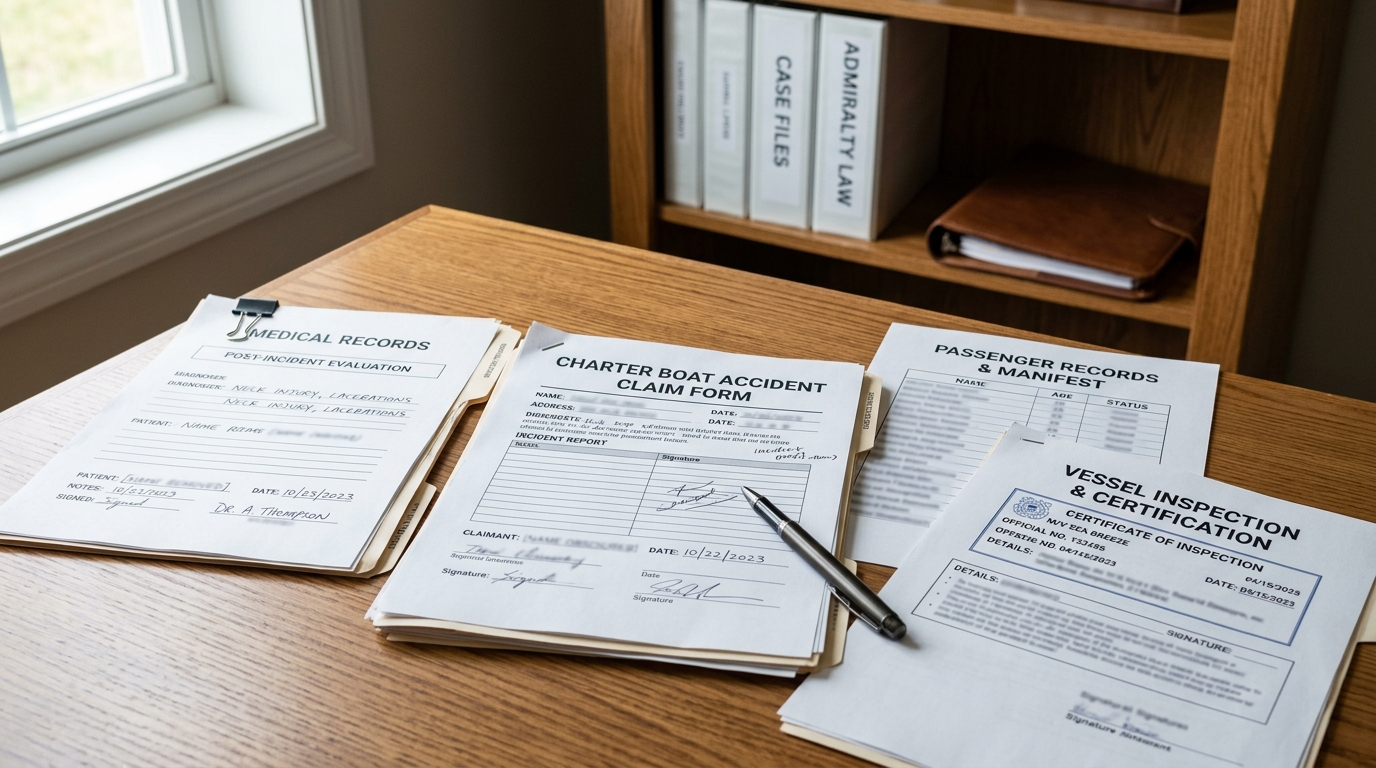
Charter boat and tour boat accident claims in New York may involve sightseeing cruises, fishing charters, water taxis, dinner boats, guided excursions, camp boats, hotel guest cruises, rental-with-captain trips, or other passenger-for-hire vessels. These claims can involve operator negligence, crew errors, missing safety equipment, poor passenger instructions, unsafe boarding, weather decisions, vessel defects, alcohol issues, or insurance disputes. People reviewing claim options after a commercial boating injury may use a boating accident lawyer Long Island resource to understand how liability, evidence, and damages are generally evaluated.
Quick Answer
A charter boat or tour boat accident claim usually depends on who operated the vessel, who owned it, whether the trip was private or commercial, whether the vessel was properly inspected, whether the operator and crew were qualified, whether required safety equipment was aboard, and whether negligence caused the injury. Important evidence may include passenger lists, tickets or booking records, vessel inspection documents, crew records, accident reports, witness statements, photos, videos, GPS data, weather records, medical records, insurance documents, and marina or dock records.
Key Takeaways
- Charter and tour boat claims may involve public vessel rules, commercial vessel insurance, premises liability, ordinary boating negligence, or product defect issues.
- New York Navigation Law defines a “Public Vessel” as a mechanically powered vessel used or operated for commercial purposes on navigable waters when compensation is received directly or indirectly in certain public accommodation, resort, or amusement settings.
- New York State Parks states that public vessels operating on the state’s navigable waters must undergo annual inspection and that the operator must be licensed by the New York Office of Parks, Recreation and Historic Preservation.
- Public vessel accident reporting may be required when an accident involves property damage above $1,000, injury requiring medical attention, fatality, or certain mechanical failures.
- Public docks, municipal marinas, state facilities, public vessels, or government-controlled areas may involve shorter notice rules.
- Evidence should be preserved quickly because vessels may be repaired, surveillance may be overwritten, passenger information may be lost, and digital vessel data may disappear.
Why Charter Boat Claims Are Different
Charter boat and tour boat claims can be different from ordinary recreational boating claims because the injured person is often a paying passenger, guest, camper, tourist, or participant who relied on the operator, crew, vessel owner, or business to provide a reasonably safe boating experience.
These claims may involve:
- Commercial trip records
- Passenger tickets or booking confirmations
- Vessel inspection documents
- Operator license records
- Crew assignments
- Safety briefings
- Passenger capacity limits
- Dock and boarding procedures
- Weather decision-making
- Emergency response plans
- Insurance policies for commercial vessel operations
A private boat crash may focus mainly on the owner and operator. A charter or tour accident may require review of the business, vessel owner, captain, crew, marina, maintenance provider, booking company, event organizer, and insurance carriers.
What Counts as a Public Vessel?
Whether a boat is treated as a public vessel can matter because public vessel rules may affect licensing, inspections, passenger limits, crew requirements, accident reporting, and evidence.
New York Navigation Law defines a public vessel as a mechanically powered vessel used or operated for commercial purposes on the state’s navigable waters, including vessels carrying passengers, freight, towing, or otherwise used for compensation, including indirect compensation connected to public accommodation, resort, or amusement settings.
This may include certain:
- Sightseeing boats
- Fishing charters
- Water taxis
- Dinner cruise vessels
- Hotel guest boats
- Camp boats
- Guided motorboat outings
- Hunting or fishing guide vessels
- Paid passenger excursions
- Commercial shuttle vessels
New York State Parks also explains that a trip may still be considered a public vessel operation when compensation is indirect, such as a hotel amenity or camp activity included with a paid stay or program.
Common Charter and Tour Boat Accident Scenarios
Charter and tour boat accidents can happen during boarding, travel, docking, fishing, sightseeing, swimming stops, watersports, or emergency response.
Common scenarios include:
- Passenger falls while boarding
- Passenger slips on a wet deck
- Boat collides with another vessel
- Vessel hits a dock or fixed object
- Passenger is thrown during sudden movement
- Unsafe wake causes injury
- Fishing charter passenger is injured by equipment
- Cruise passenger falls on stairs or walkways
- Poor lighting causes a fall
- Vessel operates in unsafe weather
- Boat takes on water or capsizes
- Passenger is injured during docking
- Passenger falls overboard
- Propeller injury occurs
- Crew fails to respond properly after injury
- Safety equipment is missing or inaccessible
Each scenario may involve different evidence. A deck fall may require maintenance and cleaning records. A collision may require GPS data and operator evidence. A boarding injury may require dock records, crew instructions, and surveillance footage.
Operator and Captain Responsibility
The operator or captain is usually one of the first parties reviewed after a charter boat accident. A passenger may rely on the operator to manage speed, route, lookout, weather, docking, passenger placement, emergency response, and safe vessel operation.
New York law requires public vessels underway under their own power to be in charge of a licensed master, pilot, engineer, or joint pilot and engineer, and also prohibits operation with fewer crew members than required by the certificate of inspection or temporary permit.
Operator or captain negligence may involve:
- Unsafe speed
- Poor lookout
- Distracted operation
- Ignoring weather
- Unsafe docking
- Failure to warn passengers
- Lack of safety briefing
- Operating without proper license
- Operating with inadequate crew
- Boating while impaired
- Overloading the vessel
- Failure to respond to an emergency
Operator qualifications, license status, work schedule, training records, and trip history may all become important.
Vessel Inspection and Certificate Issues
Inspection records can be important in charter and tour boat claims. New York State Parks states that public vessels operating on the state’s navigable waters must undergo an annual inspection, and the operator must be licensed by the New York Office of Parks, Recreation and Historic Preservation.
New York Navigation Law § 63 states that a certificate of inspection includes information such as the vessel name and number, age, inspection date, owner, required licensed officers and crew, required equipment, special restrictions, and the number of passengers the vessel can safely carry.
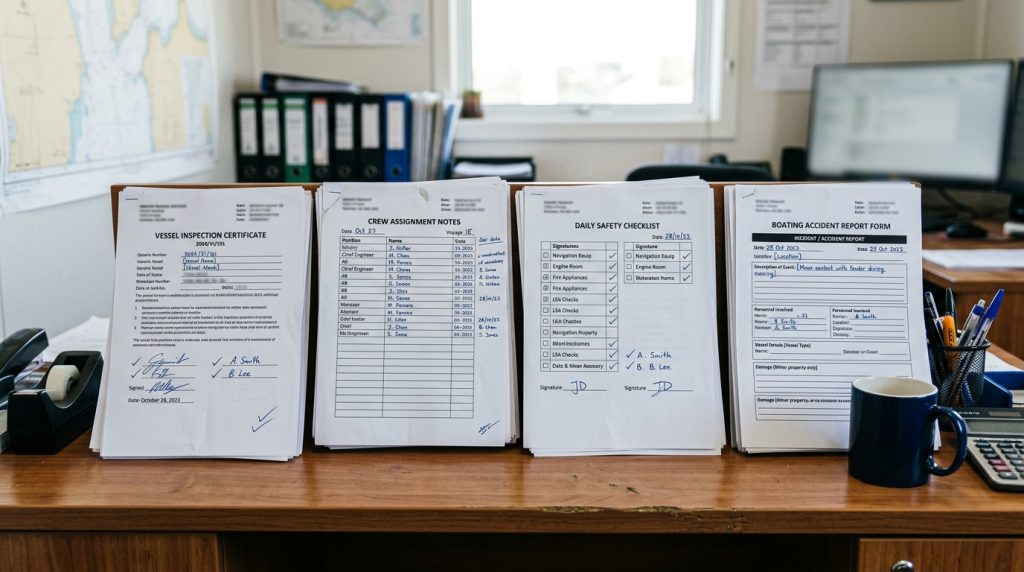
Inspection-related questions may include:
- Was the vessel inspected?
- Was the certificate current?
- Was the certificate kept aboard when required?
- Were passenger limits followed?
- Were required crew members aboard?
- Was required equipment present?
- Were special restrictions followed?
- Was the vessel modified after inspection?
- Were repairs or defects reported?
- Were prior inspection problems corrected?
A missing or outdated inspection record does not automatically decide every claim, but it may become important when safety practices are disputed.
Passenger Capacity and Overcrowding
Passenger capacity can affect stability, movement, emergency response, and injury risk. A tour boat, fishing charter, or passenger vessel may become more dangerous when overloaded or when passengers are placed in unsafe areas.
Capacity-related evidence may include:
- Certificate of inspection
- Passenger manifest
- Ticket records
- Booking records
- Crew statements
- Photos or videos from the trip
- Vessel layout
- Weight distribution
- Passenger seating records
- Emergency evacuation plans
Overcrowding may contribute to falls, blocked exits, difficulty responding to emergencies, poor balance during wake, and injuries during boarding or docking.
Boarding and Disembarking Injuries
Many commercial boating injuries happen before or after the boat is underway. Passengers may fall while stepping between the dock and vessel, using stairs, crossing a gangway, carrying gear, or exiting after the trip.
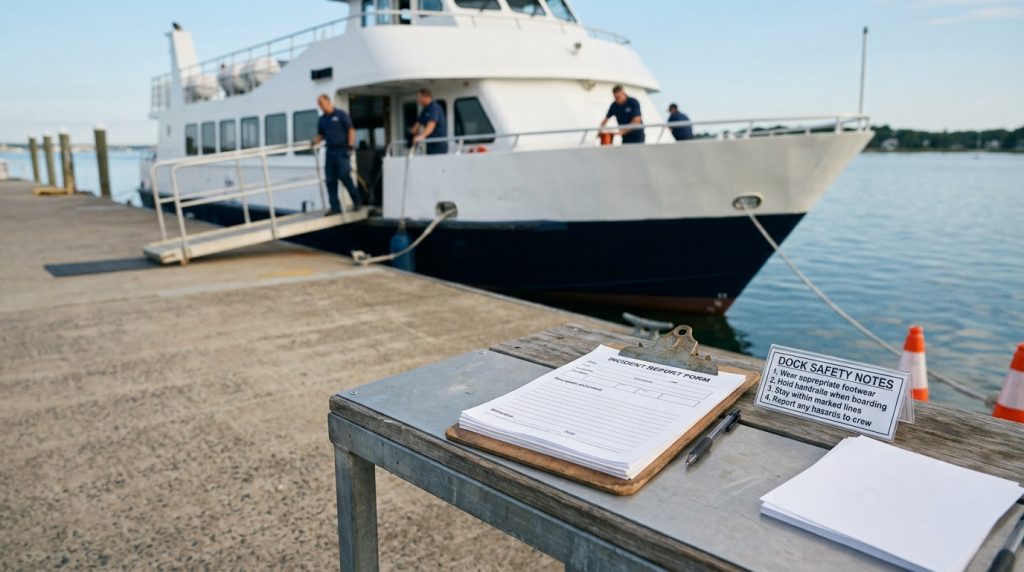
Boarding hazards may include:
- Large gaps between boat and dock
- Wet or slippery surfaces
- Poor lighting
- Missing handrails
- Unstable gangway
- Crew failure to assist
- Sudden vessel movement
- Lack of warnings
- Crowded boarding area
- Unsafe ramp angle
- Loose ropes or cables
- Dock defects
A premises liability attorney resource may help explain how property control, inspection records, maintenance practices, and notice evidence can overlap with dock and marina injury claims.
Deck, Stair, and Walkway Hazards
Passengers on charter and tour boats may move around the vessel during the trip. Wet decks, stairs, seating areas, fishing equipment, loose mats, low thresholds, gear, cables, and poor lighting can create hazards.
Deck-related injury evidence may include:
- Photos of the surface
- Cleaning records
- Maintenance logs
- Crew incident reports
- Passenger statements
- Surveillance footage
- Weather records
- Vessel design
- Warning signs
- Lighting conditions
- Prior complaints
A business may argue that wet surfaces are expected on boats. That does not automatically defeat a claim. The issue may be whether the condition was unreasonably dangerous, whether passengers were warned, whether safer procedures were available, and whether the hazard was caused or ignored by the operator or crew.
Crew Conduct and Emergency Response
Crew conduct can matter before, during, and after an accident. Crew may be responsible for passenger instructions, boarding support, emergency equipment, lookout assistance, crowd control, first aid response, and communication with emergency services.
Crew-related questions may include:
- Were enough crew members aboard?
- Were crew members trained?
- Did the crew give safety instructions?
- Did crew assist passengers during boarding?
- Did crew warn passengers before rough water?
- Did crew respond quickly after injury?
- Was first aid equipment available?
- Were emergency calls made promptly?
- Was the incident documented?
- Were passenger witnesses identified?
Emergency response evidence may include crew logs, incident reports, 911 records, passenger statements, medical records, and post-accident communications.
Weather and Route Decisions
Weather and water conditions can affect charter boat safety. A commercial operator may need to consider wind, rain, fog, tide, current, visibility, temperature, wake, and marine forecasts before departure and during the trip.
Weather-related questions may include:
- Was bad weather forecast before departure?
- Did the operator check marine conditions?
- Was the route appropriate?
- Were passengers warned?
- Did the operator slow down?
- Did the operator return to dock when conditions worsened?
- Did the business cancel similar trips?
- Did crew secure passengers and equipment?
- Did weather contribute to a fall, collision, or capsizing?
Useful evidence may include weather records, GPS data, trip route, passenger statements, company cancellation policies, text messages, and crew testimony.
Alcohol and Impaired Operation
Alcohol or drug impairment can be important in a charter or tour boat claim. Impairment may involve the operator, crew, passengers, or another vessel operator. New York Navigation Law § 49-A addresses vessel operation while impaired by alcohol or drugs.
Alcohol-related evidence may include:
- Police or marine patrol reports
- Chemical test results
- Witness statements
- Passenger accounts
- Bar or marina receipts
- Photos or videos
- Operator admissions
- Crew observations
- Event records
- Emergency responder notes
Alcohol evidence matters most when it helps explain unsafe speed, poor lookout, delayed reaction, poor judgment, or failure to respond properly after an emergency.
Fishing Charter Accident Issues
Fishing charter accidents may involve vessel movement, deck hazards, fishing equipment, hooks, lines, gear storage, weather, passenger positioning, crew instructions, or emergency response.
Fishing charter claims may involve:
- Passenger falls while fishing
- Gear left in walkways
- Hook or equipment injuries
- Unsafe deck conditions
- Crew failure to warn about rough water
- Operator fails to slow in wake
- Inexperienced passengers not instructed
- Fish handling areas not cleaned
- Passenger injured while boarding with equipment
- Unsafe casting or equipment handling
Evidence may include booking records, crew instructions, deck photos, equipment records, witness statements, medical records, and insurance documents.
Sightseeing Cruise and Water Taxi Injuries
Sightseeing cruises and water taxis may involve large passenger groups, seating areas, stairs, decks, railings, gangways, and repeated boarding or disembarking. These claims may focus on passenger flow, crew assistance, vessel condition, lighting, and crowd management.
Evidence may include:
- Tickets or booking records
- Passenger list
- Crew assignments
- Boarding procedure records
- Surveillance footage
- Photos of stairs, deck, or gangway
- Incident report
- Maintenance logs
- Prior complaint records
- Weather and route records
Injuries may happen because a surface was slippery, a gangway shifted, a passenger was rushed, or the vessel moved unexpectedly during boarding.
Mechanical Failure and Maintenance
Mechanical failure can cause serious commercial boating accidents. A charter boat may lose steering, power, throttle control, lighting, bilge function, or emergency equipment.
Maintenance issues may involve:
- Engine failure
- Steering malfunction
- Throttle problem
- Fuel system defect
- Electrical failure
- Navigation light failure
- Bilge pump failure
- Defective ladder or railing
- Broken seating
- Poor prior repairs
- Ignored mechanical complaints
Maintenance evidence may include service logs, inspection reports, repair invoices, crew reports, prior incident records, vessel inspection documents, and expert inspection findings.
Accident Reporting After a Charter Boat Accident
Accident reporting can be especially important in commercial boating claims. New York Navigation Law § 47-B requires a written report within five days when a vessel accident involves death, injury, disappearance under the water, or property damage to any one person over $1,000.
New York State Parks also states that any boating accident involving a public vessel must be reported to the Marine Services Bureau when it involves property damage over $1,000, injury requiring medical attention, fatality, or certain mechanical failures.
A report may help document:
- Date and time
- Vessel identity
- Operator information
- Owner information
- Passenger information
- Injury details
- Property damage
- Weather and water conditions
- Witnesses
- Emergency response
- Mechanical or equipment issues
The report may not include every fact, but it creates an official starting point for investigation.
Evidence That Can Strengthen a Charter Boat Claim
Charter boat claims often depend on records held by the operator, vessel owner, marina, booking company, or insurer. Early preservation can be important.
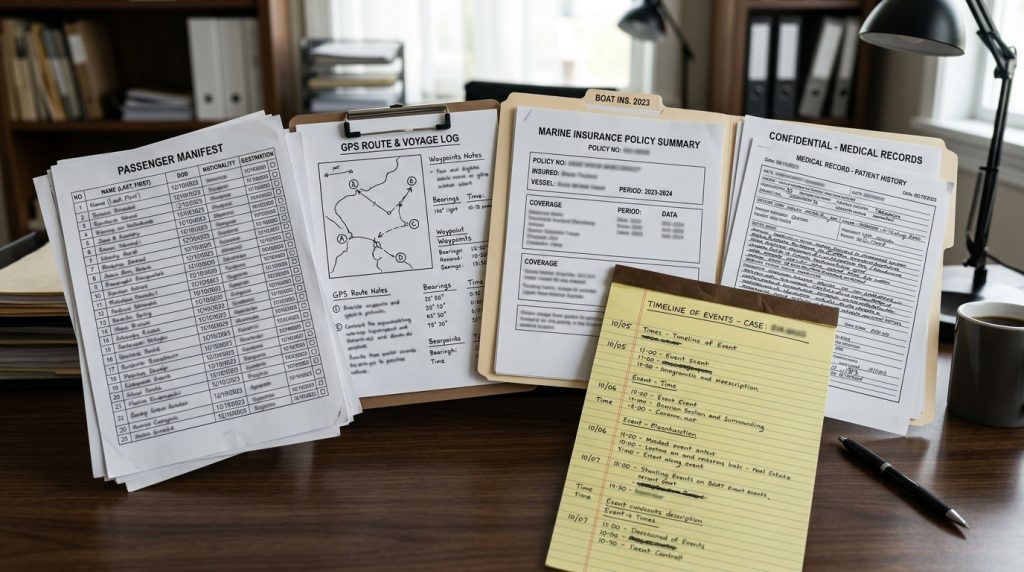
Helpful evidence may include:
- Passenger tickets
- Booking confirmation
- Passenger manifest
- Vessel inspection certificate
- Operator license records
- Crew assignment records
- Incident report
- Boating accident report
- Photos and videos
- Witness names and contact details
- Passenger statements
- GPS or route data
- Weather and water condition records
- Maintenance logs
- Repair invoices
- Safety briefing materials
- Emergency response records
- Insurance letters
- Medical records
- Public entity records, when relevant
For broader documentation planning, readers may review how evidence for personal injury claims can help connect accident facts, injury, responsible parties, and damages.
Medical Records and Damages
Medical records help prove that the charter boat incident caused injury and show the seriousness of the harm. Commercial boating injuries may involve falls, collisions, drowning risk, deck hazards, propeller injuries, burns, or impact trauma.
Common injuries may include:
- Concussions
- Neck injuries
- Back injuries
- Shoulder injuries
- Wrist fractures
- Hip injuries
- Knee injuries
- Lacerations
- Burns
- Drowning-related injuries
- Hypothermia
- Internal injuries
- Psychological trauma
- Wrongful death in severe cases
Medical records may include emergency records, hospital notes, imaging, specialist records, surgery reports, therapy notes, prescriptions, work restrictions, bills, and future care recommendations.
Insurance Coverage in Charter Boat Claims
Insurance coverage can be more complicated in charter and tour boat claims than in private boating cases. A commercial vessel may have policies that differ from homeowner’s or ordinary pleasure boat coverage.
Potential insurance sources may include:
- Commercial vessel insurance
- Charter operator insurance
- Vessel owner insurance
- Marina liability insurance
- Dock owner insurance
- Maintenance contractor coverage
- Booking company coverage
- Product liability coverage
- Umbrella or excess coverage
- Public entity coverage in limited cases
Insurance disputes may involve whether the vessel was operating commercially, whether the operator was licensed, whether the certificate of inspection was valid, whether passenger limits were exceeded, whether a policy exclusion applies, and whether the injury happened on the vessel, dock, ramp, or marina property.
Public Entities and Government-Controlled Areas
Some charter or tour boat accidents involve public docks, municipal marinas, public launches, public waterfront facilities, public vessels, state parks, or public authorities. These situations may involve shorter notice deadlines.
New York General Municipal Law § 50-E generally requires a notice of claim within 90 days when notice is required for certain tort claims against public corporations.
This makes the exact location important. A claim involving a municipal marina, public dock, public launch, state facility, public authority property, or public vessel should be reviewed early.
Deadlines for Charter Boat Accident Claims
Deadlines depend on the claim type and responsible parties. Many New York negligence-based personal injury claims have a three-year limitations period, but wrongful death, product liability, public entity, insurance notice, accident reporting, and evidence preservation issues may involve different or shorter timelines.
Practical deadlines may arrive much sooner than the lawsuit deadline. Passenger lists may be archived, surveillance may be overwritten, GPS data may be deleted, vessels may be repaired, crew schedules may change, and public entity notice rules may apply.
Common Mistakes After a Charter Boat Accident
Some mistakes can make a charter boat accident claim harder to prove.
Common mistakes include:
- Not getting medical care promptly
- Not reporting the incident in writing
- Not identifying the vessel owner and operator
- Not saving tickets or booking records
- Not collecting passenger and witness information
- Not photographing the deck, dock, stairs, or equipment
- Not requesting incident reports
- Not preserving surveillance or GPS data
- Not asking for vessel inspection records
- Not saving insurance letters
- Allowing vessel repair before inspection
- Not documenting weather or water conditions
- Giving broad recorded statements too early
- Accepting a quick settlement before injuries are fully known
- Missing public entity notice deadlines
A strong claim usually depends on early documentation, medical records, preserved vessel evidence, and identification of all potentially responsible parties.
When Legal Guidance May Be Useful
Legal guidance may be useful when a charter or tour boat accident causes serious injury, involves a public vessel, raises questions about operator licensing, includes unsafe boarding, involves missing safety equipment, happened during bad weather, or involves unclear insurance coverage.
A charter boat claim may require review of inspection certificates, operator licenses, crew records, passenger manifests, incident reports, vessel maintenance, dock conditions, weather evidence, medical records, insurance policies, public entity rules, and deadlines.
People researching local support may review a Farmingdale legal office location when looking for Long Island charter boat accident claim information. Publicly available personal injury case results may provide general context, although every claim depends on its own facts, evidence, injuries, insurance coverage, and applicable law.
FAQs About Charter Boat Accident Claims
Can a charter boat company be liable for passenger injuries?
Yes. A charter boat company may be reviewed if unsafe operation, poor crew training, inadequate passenger instructions, defective equipment, poor maintenance, overcrowding, unsafe boarding, or bad weather decisions contributed to the injury.
What evidence is important after a charter boat accident?
Important evidence may include tickets, booking records, passenger lists, vessel inspection certificates, operator license records, crew records, accident reports, incident reports, photos, videos, witness statements, GPS data, weather records, medical records, and insurance letters.
Do charter boats in New York need inspection?
New York State Parks states that public vessels operating on the state’s navigable waters must undergo annual inspection, and the operator must be licensed by the New York Office of Parks, Recreation and Historic Preservation. Requirements can vary depending on vessel type and waters involved. (New York State Parks)
What if the injury happened while boarding the boat?
A boarding injury may involve the vessel operator, crew, marina, dock owner, property manager, or public entity. Evidence may include photos of the dock or gangway, witness statements, crew instructions, surveillance footage, incident reports, and maintenance records.
How long does someone have to file a charter boat accident claim?
The deadline depends on the claim type and responsible party. Many negligence-based New York injury claims have a three-year limitations period, but wrongful death, public entity, product liability, accident reporting, insurance notice, and evidence preservation issues may involve shorter timelines.
Final Thoughts
Charter boat and tour boat accident claims in New York require careful review because the case may involve public vessel rules, operator licensing, inspection certificates, passenger manifests, crew conduct, dock conditions, vessel maintenance, weather decisions, and commercial insurance coverage. The strongest claims usually depend on prompt medical care, accident reports, photos, passenger and witness statements, preserved vessel records, insurance review, and a clear timeline showing how the injury happened.
About the Author